Lifetime Citizen Portal Access — AI Briefings, Alerts & Unlimited Follows
Council passes code amendment to allow Bear River Health Department variances for septic systems in Zone 2
Loading...
Summary
After a public hearing, the council adopted an amendment to county code allowing property owners in source-water Protection Zone 2 to repair, alter or replace septic systems with Bear River Health Department approval and to permit new systems whose absorption area is outside Zone 2. Planning commission recommended approval 6-0.
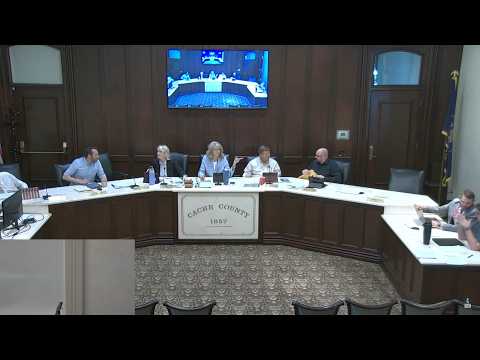
The Cache County Council voted on March 24 to adopt Ordinance 2026-16, an amendment to county code governing on-site wastewater systems in source-water protection zones.
Brian Abbott of the county's Development Services office outlined the change: the amendment creates limited exceptions in Zone 2 to allow property owners to repair or replace failing septic systems and, under certain conditions, to permit new on-site systems if the absorption area component is located outside Zone 2. The amendment also recognizes the Bear River Health Department as the technical authority on absorption-area siting and added four definitions to clarify treatments and components.
"With the written approval of a variance from the Bear River Health Department, it must be included as part of a zoning clearance application," Abbott said, explaining that the change is intended to prevent the code from being overly restrictive for repairs while preserving water-source protections.
Jordan Mathis, director of the Bear River Health Department, said the health department served as the applicant after local issues in Cove highlighted the need for targeted changes and that the department supports the proposed variance process. "So this ordinance does those two things, and we're very supportive of it," Mathis said.
The planning commission reviewed the proposal on March 4 and recommended approval by a 6-0 vote. Several council members asked for maps of protection zones and confirmed that Zone 1 is a 100-foot radius and Zone 2 is defined by a 250-day groundwater travel time, with varied extents depending on soils and hydrogeology. The council suspended the rules and passed the ordinance the same night by voice vote.
Council members and staff agreed to publish maps and outreach materials to help affected property owners understand whether their parcels fall in Zones 1 or 2 and how the variance process would work.