Get Full Government Meeting Transcripts, Videos, & Alerts Forever!
Get email alerts on the Comprehensive Plan topic
No spam. Unsubscribe anytime.
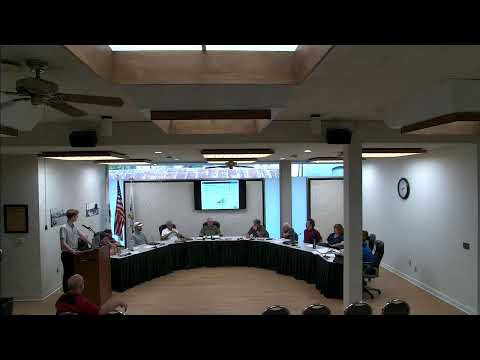
Oglesby Plan Commission advances comprehensive‑plan review, prioritizes sidewalks, downtown parking and public survey
Summary
At a meeting to update the 2020 comprehensive plan, the Oglesby Plan Commission focused on transportation, downtown revitalization and outreach: commissioners prioritized sidewalks and wayfinding, noted infrastructure limits on industrial growth, and agreed to develop a public survey before a broader community meeting.
The Oglesby Plan Commission continued its review of the city's 2020 comprehensive plan and prioritized transportation improvements, downtown revitalization and a public engagement survey. Chair (speaker 1) framed the document as "a people plan" and said the commission would focus on transportation goals and seek more input from businesses and residents.
Commissioners discussed keeping NCAT and regional passenger services in the plan, filling sidewalk gaps, and adding a shared‑use bicycle and pedestrian connection linking downtown to nearby destinations. "We have to dream a little bit big here," the Chair said as the group debated alignments and whether to pursue a pedestrian or bicycle crossing near Route 39 and the 351 bridge.
Members also weighed ways to make downtown more attractive to visitors and businesses, including wayfinding signage, enhancements to Seneca Square and limited outdoor dining. One member urged the commission to develop a downtown parking plan with marked stalls and time limits to make parking more business‑friendly while protecting residents' spaces.
The commission reviewed financing and incentives for downtown projects, confirming the presence of a downtown TIF program now identified in the draft as TIF 6 and discussing facade grant language and a possible revolving loan fund. Speakers said the city should seek outside marketing help — including university partnerships — and consider combining tourism, grant writing and economic development functions into a single marketing/economic development role.
On industrial development, commissioners repeatedly cited infrastructure limits as the main barrier to new projects. "We don't have adequate water and sewer to serve that area out there," one committee member said, noting that wastewater and substation capacity must be addressed before the city can market large industrial sites. Commissioners proposed tasks to maintain and expand existing utilities and to cultivate a trained workforce with local colleges and training centers.
The group also discussed alternative energy in the context of the city's IMEA contract; commissioners noted small local solar installations that can power about 70 homes but said the IMEA contract limits larger purchases and that ordinances typically allow rooftop or community solar for on‑site use rather than generation for resale.
For community engagement, commissioners agreed to prioritize a short public survey distributed via QR code and postcards (and optionally a Google form), and to hold an informal public forum or an August meeting if necessary. The commission set a July 8 deadline for members to submit draft survey questions and decided not to hold the previously planned July 9 meeting while staff and volunteers finalize outreach plans. "We will not have a meeting on July 9," the Chair said; staff and volunteers will instead compile survey questions and materials.
Formally, the commission approved the minutes of the May 14 meeting and then adjourned by motion. The commission asked staff to circulate the draft survey, follow up with regional partners and invite a transportation representative (NCAT) to present at a future meeting.