Get Full Government Meeting Transcripts, Videos, & Alerts Forever!
Get email alerts on the Building Permits topic
No spam. Unsubscribe anytime.
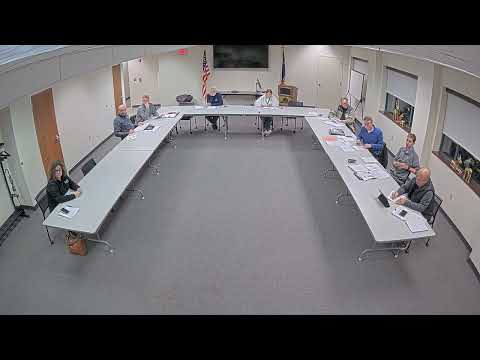
Planning Committee recommends exception to allow metal standing-seam roof on addition at 146 Links Lane
Summary
The Planning Committee recommended approval of an exception permitting a metal standing-seam roof (no exposed fasteners) for an addition at 146 Links Lane after staff said the addition’s slope is not suitable for asphalt shingles; members discussed whether the municipal code should be revised to allow complementary roofing materials.
The Planning Committee recommended approval of an exception to allow a metal standing-seam roof, without exposed fasteners, on a rear addition at 146 Links Lane.
The committee chair noted that the municipal code requires additions to match the principal building and read the relevant language: "Panels utilizing exposed fasteners will not be permitted." Staff told the committee the slope of the proposed addition is too shallow for asphalt shingles, and that metal standing-seam roofing (with no exposed fasteners) is commonly used on new construction, prompting the request for an exception for this addition.
A staff member moved to recommend approval of the addition with the requested metal roofing; a committee member seconded the motion. The chair called for a voice vote, and members responded in the affirmative, carrying the recommendation.
After the vote, members and staff discussed whether the ordinance should be amended to explicitly allow "complimentary roofing materials" for additions to reflect current construction practice. A committee member said the ordinance's original intent was to prevent installations such as roll roofing on houses with shingles, but that practice and materials have evolved. Staff pointed to the accessory-buildings provision (number 3) and confirmed that the council may grant exceptions on a case-by-case basis; several members emphasized they prefer such exceptions come before the committee or council rather than being decided unilaterally by staff.
The committee did not adopt an ordinance change during the meeting; members discussed next steps for clarifying administrative authority and potential code updates.