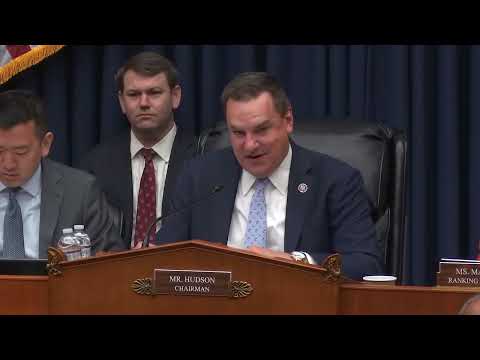
Chair opens House hearing to review Telecommunications Act of 1996 and ask whether laws fit the broadband era
Loading...
Summary
The chair of the House Committee on Energy and Commerce opened a hearing to assess the Telecommunications Act of 1996, highlighting its role in deregulation, universal service, and Section 230’s foundational role for the internet, and asking witnesses whether federal communications law should be modernized for broadband and digital platforms.
The chair of the House Committee on Energy and Commerce opened a congressional hearing Tuesday to examine the Telecommunications Act of 1996 and whether federal communications law needs updating for an era of broadband and online platforms. The chair framed the session as a 30-year review of a law he described as a landmark that ‘‘opened the communications ecosystem to new players.’’
In his opening statement, the chair traced the Act’s impact: it rewrote aspects of the Communications Act of 1934, removed some monopoly-era rules, allowed new entrants into local phone markets, let telephone companies provide video and cable companies offer voice, and enshrined principles of universal service important to rural communities. He said those changes ‘‘ultimately benefited consumers’’ when the law was enacted.
The chair also singled out Section 230 of the Communications Decency Act, describing its ‘‘26 words’’ as having ‘‘created the Internet economy as we know it today,’’ and said the panel would examine whether foundations like that still make sense given modern platforms. He contrasted the 1996 communications landscape—landlines, early web browsers and payphones—with today’s ubiquitous smartphones and social media, saying ‘‘it’s time we update our laws to reflect that.’’
The opening statement posed several concrete questions for witnesses and lawmakers: whether separate regulatory silos for different communications technologies still make sense; whether rules aimed at legacy services such as payphones remain necessary; whether Section 230 should be revisited; and how media ownership policy should adapt now that broadcasters compete with digital platforms for audiences and revenue.
The chair said Congress should seek a policy framework that accommodates current technologies while remaining adaptable to future ones. He introduced an ‘‘esteemed panel of witnesses,’’ including some who helped draft the 1996 Act, and then recognized the committee’s ranking member for her opening remarks.
The hearing will continue with witness testimony and question-and-answer exchanges with committee members.