Get Full Government Meeting Transcripts, Videos, & Alerts Forever!
Get email alerts on the Tax Increment Financing topic
No spam. Unsubscribe anytime.
Residents press village on access, taxes and school impacts at Bridal/Triple Lakes business district and TIF hearing
Summary
At a Community and Economic Development Committee hearing, village officials and consultant Adam Stroud outlined a business-district sales-tax and a 23-year TIF plan for the proposed Triple/Bridal Lakes development; residents raised concerns about access roads, village financial exposure and school funding implications.
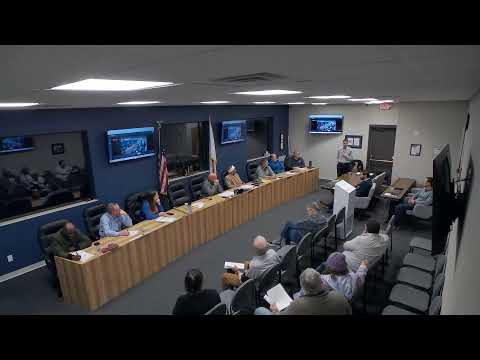
The Community and Economic Development Committee held a public hearing on a proposed business district and tax-increment financing (TIF) redevelopment plan for roughly 200–300 acres in the village's northwest corner, where officials said commercial, multifamily and single-family development is planned.
Consultant Adam Stroud of PGAV told the committee the business district is the sales-tax component of the project’s incentive package and “it will be taxed 1% higher than what it otherwise would be” inside the district boundaries (sales tax only applies within the business-district borders). He said the TIF would freeze the current farmland value for overlapping taxing bodies, allow the village to reimburse the developer for infrastructure costs and that the village would repay up to $3,300,000 for sewer work once it meets required standards.
The consultant described the TIF as a performance-based incentive: tax revenues only flow if development produces property and sales tax. He said the plan anticipates commercial development near the Frank Scott Parkway–Union Hill Road intersection, multifamily apartments along Frank Scott Parkway and single-family homes further back, but stressed details are not finalized and builders will follow county zoning, traffic studies and other approvals.
Members of the public asked several practical questions. Robert Bickler, a Saint Clair Township resident, told the committee the access route off Winslow Road has been the only reliable alternate egress for some properties and asked whether the developer’s plans will keep that road accessible. Bickler said he had spent years keeping the alternate route passable and asked whether Keller (the current owner) would retain control of the land during development.
A Saint Clair County Transit representative asked the village and the developer to reserve or convey property or easements so the agency can include a segment of the Liberty Heights Trail connection as part of the project, rather than returning later to negotiate right-of-way. The representative suggested the developer could build or grant the easement and the transit agency would assume maintenance.
Several residents asked how the TIF will affect village finances and taxes. Maria Malloy of Swansea requested written numbers and said she was “not against this” development but worried Swansea could be fronting sewer costs and might be left responsible if a developer defaults. Stroud responded that the $3,300,000 is not structured to pay interest and that quicker construction means quicker repayment to the village; he also emphasized that much preliminary engineering and a county traffic study will be required before final approvals.
The committee and the consultant clarified the TIF eligibility point the village used: under Illinois law, the district qualifies in part because the land lacks adequate streets to support development, a condition that can meet statutory “blight” criteria even on farmland. Stroud also said the village–developer agreement does not authorize TIF funds to pay for mine-subsidence stabilization work and that developers are expected to protect their own investments against such risks.
School officials urged close coordination. Matt Staggs, superintendent for District 110, thanked staff for early engagement and reminded the committee that local property-tax revenue is a major share of school funding; he asked the village to keep districts informed because new housing can bring students and long-term costs for schools.
The committee did not take final action on the business district or the TIF at the hearing. Officials said a joint review board of impacted taxing bodies will meet as part of the TIF process and that the village board could consider approval of the business district and TIF in January, subject to required studies, county approvals and the formal review process.
Adjournment: The committee closed the hearing and adjourned at 06:10.