Fayetteville nonprofit lays out Cato Springs inclusive community plan and warns of Medicaid funding and workforce gaps
Loading...
Summary
SLS Community presented an integrated 'live‑work‑play' vision tied to the Cato Springs development to provide housing, supported residential services and employment for neurodivergent adults; presenters emphasized CSSP/CES waiver pathways but highlighted staffing shortages for behavior analysts and direct support professionals.
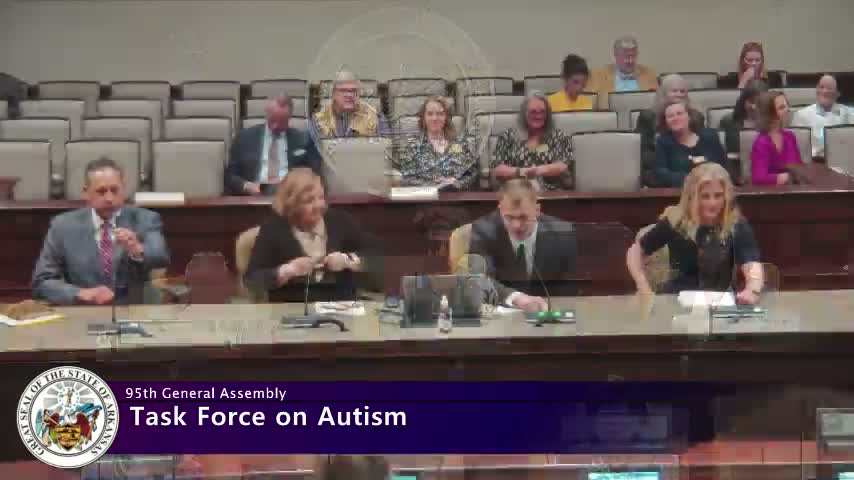
Ashton McCombs, executive director of SLS Community, told the task force that SLS is building toward an integrated model of housing, employment and clinical supports tied to the planned Cato Springs mixed‑use development in south Fayetteville.
"We are building a live‑work‑play community where residential, vocational, health and wellness resources are accessible and affordable for neurodivergent adults," McCombs said, outlining a phased development anticipated to unfold over many years. He said the development team envisions roughly 1,200 to 1,500 units, with approximately 8 percent of units allocated for neurodivergent adults dispersed across the site, and that initial infrastructure was supported by a HUD grant and a municipal match.
Mary Ann McIntyre, SLS’s clinical director, described in‑house vocational and residential supports, a 'program forge' supported employment pathway, and small residential homes where life skills are taught. She said SLS began a first cohort (four individuals in the inaugural year) and has since grown its census to nine for individualized vocational programming; SLS operates as a Community Support Systems Provider (CSSP) and bills currently under the CES waiver while pursuing billing pathways that could support intensive behavioral health care for adults with complex needs.
Speakers described workforce constraints: SLS staff include registered behavior technicians and some Board Certified Behavior Analysts (BCBAs) but said Arkansas billing and waiver rules limit what can be reimbursed for adult services. "We have about four or five of our staff who are registered behavior technicians," McIntyre said, adding that Arkansas's billing codes constrain reimbursement for adult services and for higher‑intensity supports. Multiple parents and board members testified that access to trained direct support staff and ongoing ABA consultation has been crucial to stable community living for adults with complex needs.
McCombs said SLS has national accreditation (Council on Quality and Leadership) and that the Cato Springs partnership included a HUD grant secured in the 2023 federal budget; he said SLS is trying to scale services ahead of the phased development and to use its CSSP designation to access both CES and behavioral health waiver services. Task force members asked about timelines and funding; McCombs estimated the first leaseable phase to be two to three years out and cautioned that full buildout will depend on market forces over a decade or more.
A task force member asked the committee to address national reporting on ABA oversight and to consider what state policy or oversight changes might be needed; the meeting closed with a request to include appointment information for the public and future discussion of oversight issues.