University of Arkansas outlines EMPOWER and autism support programs, cites $5,000 per‑semester fee and scholarship supports
Loading...
Summary
University of Arkansas presenters described EMPOWER (a non‑degree inclusive postsecondary program launched in 2017) and the Autism Support Program (degree‑seeking supports launched in 2012), noting current enrollments, residential and career mentoring, and a $5,000 per‑semester fee offset by scholarships and fundraising.
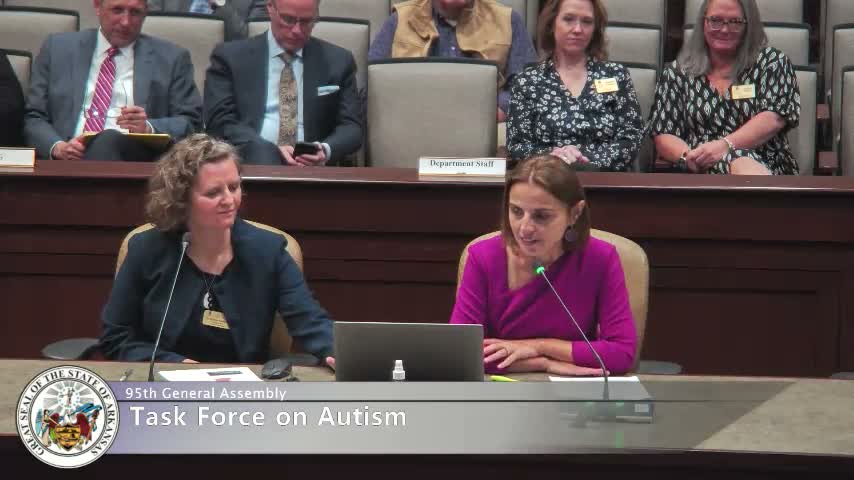
Kate Mameseshvili, a presenter representing the University of Arkansas College of Education and Health Professions, told the task force on April 1 that the college runs two campus programs for students with autism and other disabilities: EMPOWER, a non‑degree postsecondary program, and an Autism Support Program (ASP) for degree‑seeking students.
"We prepare students for careers in education and health care," Mameseshvili said, describing the college's scope and the programs' placement inside the College of Education and Health Professions. Dr. Suzanne Kucharczyk, associate professor and faculty advisor to the EMPOWER program, said EMPOWER launched in 2017 with three students and now serves a larger cohort while ASP has supported about 70 students since 2012 and currently serves about 16 degree‑seeking students.
The presenters said EMPOWER is an inclusive, four‑year, non‑degree program for young adults (generally ages 18–24) with mild intellectual disabilities who can live independently with limited supports and that the program is approved by the U.S. Department of Education as a comprehensive transition and postsecondary program, making students eligible for financial aid. Kucharczyk described a person‑centered plan that is developed with students and families, residential mentors who live in Morgan Hall for two years, peer mentors and career coaches, and Memoranda of Understanding with about 20 community internship sites in Northwest Arkansas.
Kucharczyk said program fees for both EMPOWER and ASP are $5,000 per semester. "We continue to do a cost analysis with our peer programs to make sure that this is still affordable for our students," she said, adding that the college uses scholarships, fundraising and the university's development office to offset costs for families.
Task force members asked whether that figure was per semester or per program; Mameseshvili and Kucharczyk confirmed the fee is charged each semester. They said scholarships from foundations (including sustained support from the Chilton Foundation), individual contributions, fee waivers and existing financial aid are the primary ways they reduce out‑of‑pocket cost for students.
The presenters also described the academic and social components of both programs: students take university credit hours (about 15 per semester for EMPOWER students, including six EMPOWER courses focused on independent living and employment readiness), participate in service learning and volunteering in the first two years, then transition to sustained internships and work placements in junior and senior years. Kucharczyk said graduates of the programs are included on the university's senior walk and praised the stability that long‑running leadership has provided for ASP.
The task force did not take formal action; presenters were invited to return for future meetings to provide additional detail about costs, scholarship availability and outcomes tracking.