Get Full Government Meeting Transcripts, Videos, & Alerts Forever!
Get email alerts on the Public Safety LRA topic
No spam. Unsubscribe anytime.
Residents urge Kennewick council to block neighborhood placement of less-restrictive housing for violent offenders
Summary
Dozens of residents addressed the Kennewick City Council on March 3 opposing a proposed less-restrictive alternative (LRA) residence in a residential neighborhood, citing vandalism, safety concerns near schools and childcare, and calls for industrial siting or legislative change.
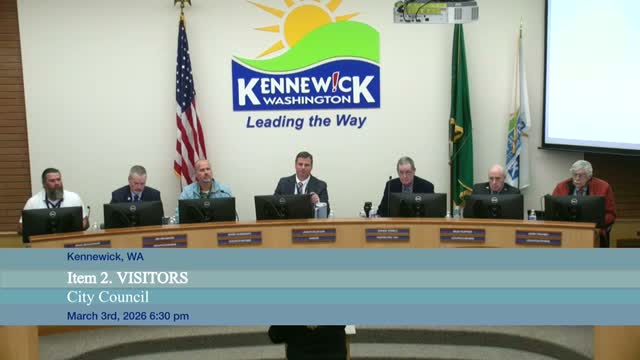
Dozens of residents told the Kennewick City Council on March 3 that a planned less-restrictive alternative (LRA) residence for people convicted of violent offenses should not be located in an 8th Avenue neighborhood.
At the public-comment portion of the meeting, multiple speakers — including Tiffany Thornhill, Jeannie Gilmore, Katie Perry and Doug Fearing — described repeated vandalism at the property that neighbors say was announced to police only after the owner was contacted, expressed concern about proximity to a planned childcare facility and playground, and urged the city to either require different siting or seek legislative changes. "When state forces these facilities into residential neighborhoods without clear local guidelines, it creates a volatile environment that threatens the safety of neighbors and the stability of the program itself," said Katie Perry.
Several speakers named the property owner or operators and questioned their fitness to run the facility. Jeannie Gilmore described rocks thrown through windows and said security cameras at the house had not alerted the owner; Doug Fearing said neighbors have retained counsel and established a fundraising page and warned of a possible class-action response if the placement is approved. "If he cannot manage and be aware of an empty house covered in security cameras right now, how are we supposed to feel any safety whatsoever once violent felons are placed there?" Gilmore said.
Other residents urged the council to pursue zoning-based solutions. Tiffany Thornhill, who identified herself as a longtime local resident and low-income household head, urged the city to expand housing and social services locally and called for income-based utility assistance. Multiple speakers recommended directing LRAs to light-industrial zones to provide a buffer from schools and parks; Perry told the council that moving placements to industrial areas would "provide a distance and security buffer that keeps these facilities away from schools, parks, and playgrounds."
Council members and staff responded during later agenda items that the city is coordinating with neighboring jurisdictions and state lawmakers on the issue and exploring zoning and legislative avenues. Mayor McShane noted that the council has directed staff to pursue coordinated legal and legislative strategies and that staff and the city attorney are working with other cities on a regional approach.
The public-comment session did not include formal action on the LRA; council members said they will continue pursuing zoning clarification and legislative outreach as a next step.