Get Full Government Meeting Transcripts, Videos, & Alerts Forever!
Get email alerts on the Code Enforcement topic
No spam. Unsubscribe anytime.
Woodland planning commission seeks clearer enforcement flow, higher baseline fines to curb long-running nuisances
Summary
City staff and commissioners reviewed Woodland's complaint-driven code enforcement process, discussed misaligned civil and criminal penalty language, and asked staff to draft a revised enforcement flowchart, measurable nuisance definitions, and higher baseline fines to improve voluntary compliance.
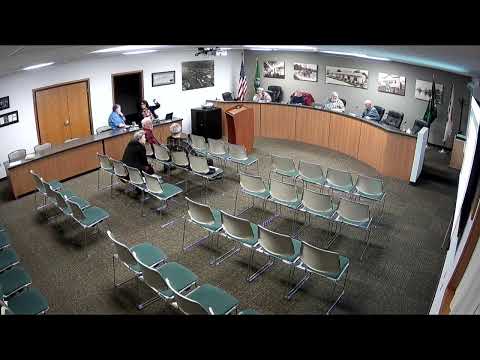
At a March 19 workshop, the Woodland Planning Commission reviewed the city's code enforcement process and asked staff to return with a clearer flowchart and proposed changes to fines and nuisance definitions.
Travis Goddard, the city's community development director, summarized the current, complaint-driven enforcement sequence: education/outreach (two types of postcards), an inspection and reinspection, formal letters, a notice and order, then potential appeals to an independent hearings examiner and, ultimately, county court. "We do not self-report unless it's a life safety issue," Goddard said, describing how staff try to secure voluntary compliance before relying on fines or abatement. He outlined how penalties can accrue daily for each separate violation and gave a recent example of cumulative monthly penalty letters that reached an $8,250 total before payment was made.
The commission focused on two recurring problems: inconsistent penalty language across the city code and vague nuisance definitions that make enforcement subjective. Goddard told the commission several code sections still refer to criminal misdemeanors while others treat the same conduct as civil infractions. He pointed to the vegetation section that references a misdemeanor punishable by up to $1,000 or jail as an example of language that conflicts with the civil infraction schedule elsewhere.
Commissioners pressed for measurable, objective thresholds that staff can enforce. Goddard shared examples from nearby jurisdictions: Clark County identifies an accumulation threshold ("more than 1 cubic yard" of waste) and Kelso and La Center provide clearer nuisance lists and numeric limits. "If someone drives by and takes a picture, it's pretty hard to not argue that it's a visible nuisance," Goddard said, arguing for standards that reduce subjectivity.
The group discussed how certain cases require interdepartmental coordination. Several commissioners asked whether the flowchart should branch for junk or inoperable vehicles, noting police tagging often prompts faster compliance. Staff acknowledged the police will typically act only when an apparent criminal or public-safety element exists, while many vehicle and storage issues fall to code or zoning sections that lack nuisance definitions.
On fines, the commission debated whether the current tiered "class 1—lass 4" structure (which staff said includes a class 1 at $250, class 2 at $125, class 3 at $50 and class 4 at $25 per violation) should be replaced or clarified. Multiple commissioners said a $25 minimum is too low and suggested $50 as a starting point with automatic escalation (for example, doubling after 30 days) to incentivize compliance while avoiding overly punitive measures.
Staff also reviewed permitting and timing changes in state law that were referenced in the meeting materials (identified in the presentation as "5290"). Goddard said Woodland already follows some timelines but recommended reorganizing code so process time limits and enforcement procedures are centralized rather than scattered across multiple chapters.
Other topics included SEPA (State Environmental Policy Act) exemptions that can speed small residential projects, the removal of proposed residential design-review language for ADUs from the current draft, and voluntary mitigation examples (staff described a case in which a project proponent agreed to provide $50,000 for a local intersection study and improvements).
The commission directed staff to draft: (1) a clearer enforcement flowchart with separate branches for police-handled vs. code-handled cases, (2) measurable nuisance definitions (for vegetation, outside storage, junk vehicles and visible waste), and (3) a revised fine schedule with higher baseline fines and automatic escalation. Goddard said he would email jurisdiction examples and prepare a draft for the commission's review before the next meeting.
Votes at a glance: The commission unanimously approved the meeting agenda and unanimously approved the February minutes earlier in the session.
The commission adjourned after confirming administrative items and reiterating that staff will return with a proposed draft enforcement flowchart, code edits, and a recommended fine schedule for further deliberation.