Get Full Government Meeting Transcripts, Videos, & Alerts Forever!
Get email alerts on the Wastewater Infrastructure topic
No spam. Unsubscribe anytime.
Lynnwood outlines $250 million wastewater plant upgrade and phased delivery plan
Summary
City staff briefed council on a multiyear, phased upgrade of Lynnwood's wastewater treatment plant to meet new Puget Sound nutrient‑removal rules and increase capacity. Staff cited a planning estimate of about $250 million, recommended a collaborative delivery method (GCCM) with an owner advisor, and said an owner‑advisor RFP is under way.
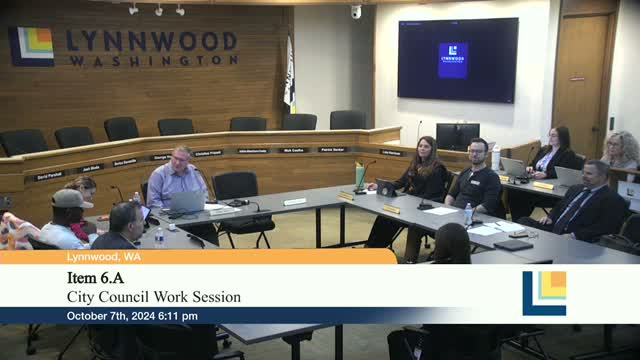
Lynnwood public works staff on Oct. 7 told the City Council they have completed planning for major upgrades to the city's wastewater treatment plant and are preparing the project for design and permitting.
Wastewater program manager Hassan Sheikani said the city's general sewer plan and facility plan were approved by Ecology and that two main drivers require the work: new regulatory nutrient‑removal requirements for discharges to Puget Sound and increased treatment capacity after more than 30 years without substantial upgrades. "This plant wasn't built...for removing nutrients," he said, adding the upgrades are intended to extend the facility's useful life 20–40 years.
Staff described a three‑phase construction approach that aims to keep the plant operational while work proceeds and stressed the constrained site footprint. Because the plant sits in a tight ravine surrounded by residences and a railroad, the recommended approach is to maximize capacity within the existing site rather than build a new facility elsewhere.
On procurement, staff recommended a collaborative delivery method — general contractor/construction manager (GCCM) with an owner advisor — to reduce conflicts between designers and builders and to provide better early cost forecasting. Deputy Director Jared Bond said the owner‑advisor RFP is out and that the firm will review and help update cost estimates and delivery strategy; staff expect to interview firms and return to council for contract approval in December.
Staff cited a planning‑level cost estimate of about $250,000,000 (two‑year‑old estimate) and told council that one of the owner advisor's first tasks will be to update that figure. When asked about cost overruns and rate impacts, staff said GCCM with a guaranteed maximum price and early cost feedback can reduce surprises but cannot eliminate risk; staff emphasized close oversight and adjusting designs at early milestones if forecasts show costs exceeding available budgets.
Councilors asked how the project will handle odor complaints, staging space and coordination with neighboring Edmonds (the city owns adjacent parcels in Edmonds that could be incorporated). Staff said odor issues are taken seriously, they track complaints with field meters and staff visits, and modifications are planned to remedy recent trailer‑filling changes that affected odor control. Staff also said they are evaluating an interlocal agreement with Edmonds for staging parcels and will revisit revenue allocations with stakeholders who use the plant.
Staff emphasized the project will be a long, complex effort with multiple briefings and that the city will return with contracts and more detailed cost information as the owner‑advisor and design teams are selected.