Get Full Government Meeting Transcripts, Videos, & Alerts Forever!
Get email alerts on the Solid Waste topic
No spam. Unsubscribe anytime.
Waste contractor presents new transfer-station agreement; council discusses recycling and state organics mandate
Summary
Jeff Johnson presented a revamped transfer-station/drop-box contract that would modernize container sizes, improve signage and allow Friday–Saturday drop-box access; council discussed fees for nonresidents, acceptance of tires and the state mandate to expand curbside recycling and organics diversion by 2030.
Benton City — A representative for the city's solid-waste services outlined a proposed, more flexible contract for the transfer station and drop-box site and discussed operational changes tied to state recycling and organics mandates.
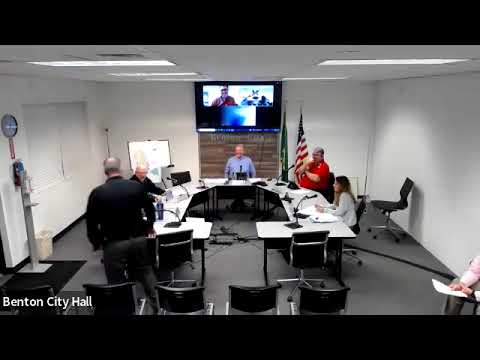
Jeff Johnson, who introduced himself to the council as Jeff Johnson, presented a replacement agreement to modernize the city's 1999 contract. He said the new contract separates core contract language from appendices so container sizes, rates and operational provisions can be adjusted without wholesale contract amendments: "We are not a vendor. We are your utility," Johnson said, framing the relationship as a long-term partnership rather than a short-term contract.
Johnson described planned operational changes: the drop box will be open with demand-based access on Fridays and Saturdays, and the city will retain a discounted pick-up or resident program while charging non-city users a higher rate. He also said the company will improve fencing, signage and introduce secured containers for tires and bulky items; staff discussed use of a secured Connex box to manage tire collection.
Council and the presenter spent considerable time on recycling and organics policy. Johnson and staff warned that state-level requirements are moving cities toward expanded curbside recycling and organics diversion; meeting discussion referenced a state timeline that would require broader organics management and curbside services by 2030. Johnson noted practical constraints: markets and processing facilities for food waste and contaminated materials are limited and additional trucks, routes and costs will be required to comply.
Council members raised operational questions (hours, which materials will be accepted, how resident discounts apply), and staff said they will continue operational coordination and return with contract details and implementation plans.
The council accepted Johnson's presentation and indicated it will bring the formal contract back for further council review at a future meeting.