Get Full Government Meeting Transcripts, Videos, & Alerts Forever!
Get email alerts on the School Budget topic
No spam. Unsubscribe anytime.
RSU 16 budget committee pauses modular order, flags FY28 project costs and enrollment dip
Summary
At a March budget-committee meeting, RSU 16 members debated whether to buy or finance a modular classroom to house incoming pre-K students with IEPs, flagged a miner project that will start this summer but whose payments begin in FY28 (about $282,000), and approved routine articles on tuition, system and school administration.
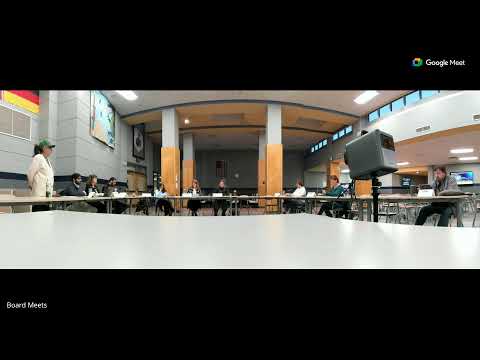
Amy, chair of the RSU 16 budget committee, led a March 4 meeting that balanced routine budget approvals against looming capital and enrollment pressures and a contested decision over a modular classroom for early childhood special education.
The committee heard that RSU 16 will accept responsibility next year for 4‑year‑olds with individualized education programs (IEPs). The district currently has 18 four‑year‑olds with IEPs; five are projected to join an inclusive program at PCS and the remainder would attend home schools or pre‑K. Chair Amy said the district plans to hire a coordinator/teacher, educational technicians and a part‑time administrative assistant; those positions are expected to be state‑reimbursed.
Why it matters: members said staffing and capital timing push the district toward difficult trade‑offs. Enrollment is down roughly 61 students year‑over‑year, with pre‑K falling to about 24 students. That decline, combined with the state’s revised 85% valuation/15% enrollment cost‑share formula for FY27, changes how much local tax must be raised to balance the budget.
The committee also reviewed capital obligations. Amy told members a miner (project) will begin this summer but that debt service starts in fiscal 2028, with a projected first‑year payment of roughly $282,000. The district’s School Revolving Renovation Fund (SRF) stands at $6 million; about $3.5 million of that is forgivable and $2.5 million must be repaid. Committee members said an additional $3.1 million will be required to finish planned projects, and the district is examining whether to master‑lease, bond, or otherwise finance that gap.
Modular debate and pause: the meeting’s most contested topic was a proposed PCS modular classroom intended to relieve space constraints and house incoming students. Some members urged paying the full cost up front to avoid adding annual payments to future budgets; one member argued, "We might as well rip the band aid off and get it done" (Committee member S5). Others, including Chair Amy, raised safety and student‑integration concerns about freestanding modulars (outside entrances, students feeling separate from the main building) and recommended exploring interior reconfigurations or consulting an architect first.
Committee members set an internal ordering deadline tied to their April meeting—if ordered, the modular must be in place with systems and fencing on a tight timeline—but the group agreed to pause ordering to gather more analysis on space alternatives, costs and long‑term effects on FY28 budgets.
Approved items and next steps: the committee approved the LRTC tuition line (Article 3), tentatively adopted Article 5 (student and staff support), and approved Articles 6 (system administration) and 7 (school administration). Stacy reviewed revenue assumptions, including an FY27 required local mill expectation of 5.645 and a $1,000,000 use of fund balance consistent with FY26. The chair asked finance and operations subcommittees to bring refined tax‑impact estimates and updated contingency lines to the April meetings.
Quotes that capture the meeting tone: Amy said, "If you don't remember anything from tonight, at least remember a mining project does happen this summer," signaling the committee’s concern about deferred costs that shift into FY28. Mark, the technology director, described planned network and equipment purchases as maintenance and upgrades rather than new programs.
What’s next: the committee will revisit the modular question with additional cost analyses and architectural input, receive updated contingency and tax‑impact estimates, and forward its recommendations to the full board at the April 13 meeting.