Get Full Government Meeting Transcripts, Videos, & Alerts Forever!
Get email alerts on the Environment topic
No spam. Unsubscribe anytime.
WDFW, Yakama Nation to begin pilot removal of water star grass in Lower Yakima River near Benton City
Summary
The Washington Department of Fish and Wildlife and the Yakama Nation will begin a pilot project next week to remove dense water star grass in a 1.5-mile Benton City reach of the Lower Yakima River, using a spider excavator and monitoring impacts on Chinook salmon. Work will use the Benton City boat launch and is expected to run through the end of the month.
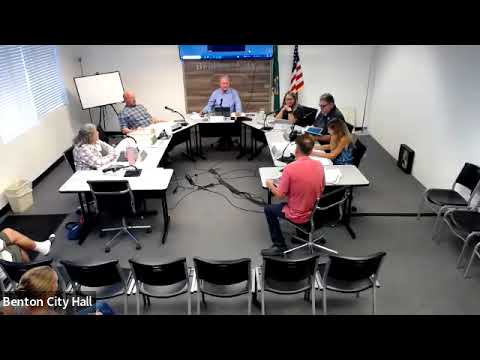
The Washington Department of Fish and Wildlife and the Yakama Nation plan to begin a pilot removal of dense water star grass in the Lower Yakima River near Benton City as early as next week, WDFW habitat biologist Cassandra Weeks told the Benton City Council on Sept. 2.
"We're excited that beginning today, September 2, the Washington Department of Fish and Wildlife in collaboration with the Yakama Nation will lead a project to remove water star grass in 2 reaches of the Lower Yakima River," Weeks said. The Benton City reach will be worked from the Benton City boat launch upstream about 1.5 miles, she said.
Weeks said crews will use a spider excavator with a rake implement to remove the plant and a long-reach excavator parked on the bank to collect biomass. Some material will be left on-site and some will be collected for off-site composting; WDFW has partnered with a private landowner to accept biomass for composting. The agency will deploy drone monitoring and conduct Chinook spawning surveys before, during and after the work.
Troy Makas, an area habitat biologist with WDFW, said prior removals using other equipment have shown short-term improvements in habitat. "Areas that they've done with the water star grass harvester, they've seen it not come back immediately the next year," Makas said, while noting long-term data are limited because many projects were early-stage or short-term.
Council members asked about public access and timing. Weeks said the boat launch will remain available to the public; crews will concentrate work on Mondays, Tuesdays and Wednesdays to minimize interference with recreation, and the southern side of the launch will remain open for river access. The agency will post two signs at the boat launch explaining the work.
WDFW staff and council members discussed ecological effects: Weeks and colleagues described dense water star grass as a native plant that has proliferated because of altered flows and drought, forming mats that reduce fish passage and raise water temperatures, potentially displacing fall Chinook from historic spawning areas. Weeks noted dissolved-oxygen fluctuations have been observed in areas dominated by the plant and that higher river flows that create scouring can help reduce roots and sediment that support its growth.
The pilot is framed as a coordinated effort among state, tribal and local partners; Weeks thanked Benton City staff for logistical support. WDFW will share a blog and reports on the project and invited council and residents to contact the agency with questions.
Next steps: WDFW expects to begin in the Benton City reach as early as next week, monitor conditions with drones and spawning surveys, and report back on findings after the project ends (work may continue through the end of the month).