Get Full Government Meeting Transcripts, Videos, & Alerts Forever!
Get email alerts on the Municipal Finance topic
No spam. Unsubscribe anytime.
Chino Hills staff preview fee-schedule changes, including larger developer deposit for large projects
Summary
At a Jan. 14 workshop, Finance Director Krista LaHazier walked the council through proposed amendments to Chino Hills’ Master Schedule of Fees, including new inspection fees and a $50,000 initial deposit for consultant-assigned entitlement reviews; staff said most immediate changes would take effect in early 2025 and adoption will return at a later public hearing.
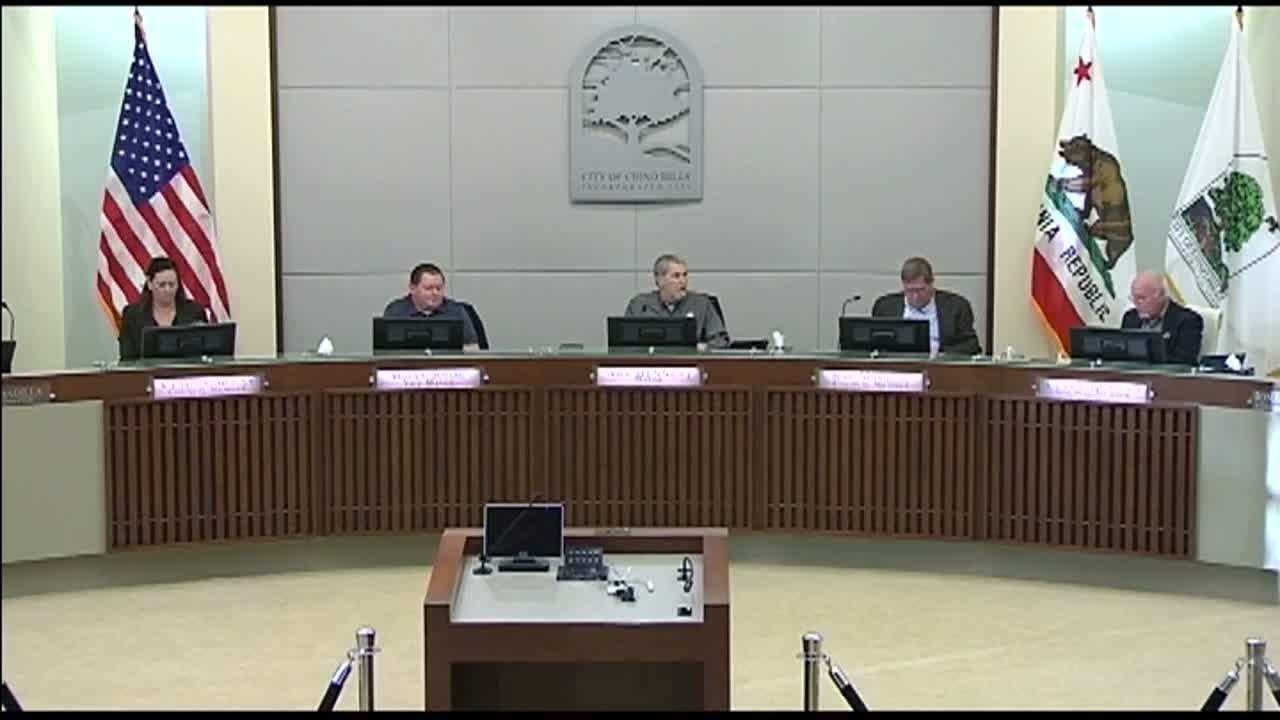
Finance Director Krista LaHazier presented proposed amendments to the city’s Master Schedule of Fees, Fines and Penalties during a Jan. 14 special workshop, telling the council the annual schedule update will move from April to October to separate fee changes from the budget process.
LaHazier said some changes are needed before October and that finance and community‑services fee changes would take effect Feb. 1, 2025, while building, development services and public‑works fees would take effect April 1, 2025. "We are here to discuss the proposed amendments to the master schedule of fees, fines, and penalties originally adopted 04/23/2024," she said.
Key building‑services proposals include four new fees: $267 for installation of up to three residential plumbing fixtures (with a 50% surcharge per additional fixture), $535 for certain commercial fixture installations, an after‑hours inspection fee tied to overtime, and a $267 fee when work proceeds without a required inspection to recover staff investigation time. LaHazier said those amounts are based on inspection counts and staff time estimates.
On land‑development review, staff proposed a new $25,000 entitlement review fee to cover reviews now assigned to consultants because of staffing changes. LaHazier also told the council the initial deposit for post‑entitlement engineering consultant services would increase from $10,702 to $50,000 "to reflect the actual costs that are currently being incurred." When asked whether that deposit is a developer cost, staff answered it is: the deposit is collected up front, used to secure consultant services and reimbursed to the developer if unused.
Public‑works engineering also proposed new initial deposits — for example, 5.5% of the engineering cost estimate for inspections of mechanically stabilized earth walls — and updates to encroachment and grading permit deposits to match current engineering worksheets.
Council members asked how the new deposits apply to different project types. Staff said the $50,000 deposit is intended principally for large tract developments and commercial projects that require consultant engineering reviews, and that staff can apply flexibility for smaller projects where appropriate.
Other operational changes discussed included combining certain geotechnical and grading fees to reduce costs, modest reductions to address‑change and reinspection fees based on revised staff time estimates, and a vendor‑passed electronic e‑check fee (50¢–$1.95) for some business and software transactions (staff confirmed it would not apply to residents’ water bills).
LaHazier said adoption will not occur at this workshop; the item will return for a public hearing and formal adoption at a future council meeting. "We’ll bring it for adoption, not tonight, but at the next council meeting," she said.
Next steps: staff will return the item for public hearing and adoption after the council workshop and additional review.