Get Full Government Meeting Transcripts, Videos, & Alerts Forever!
Get email alerts on the Council Compensation topic
No spam. Unsubscribe anytime.
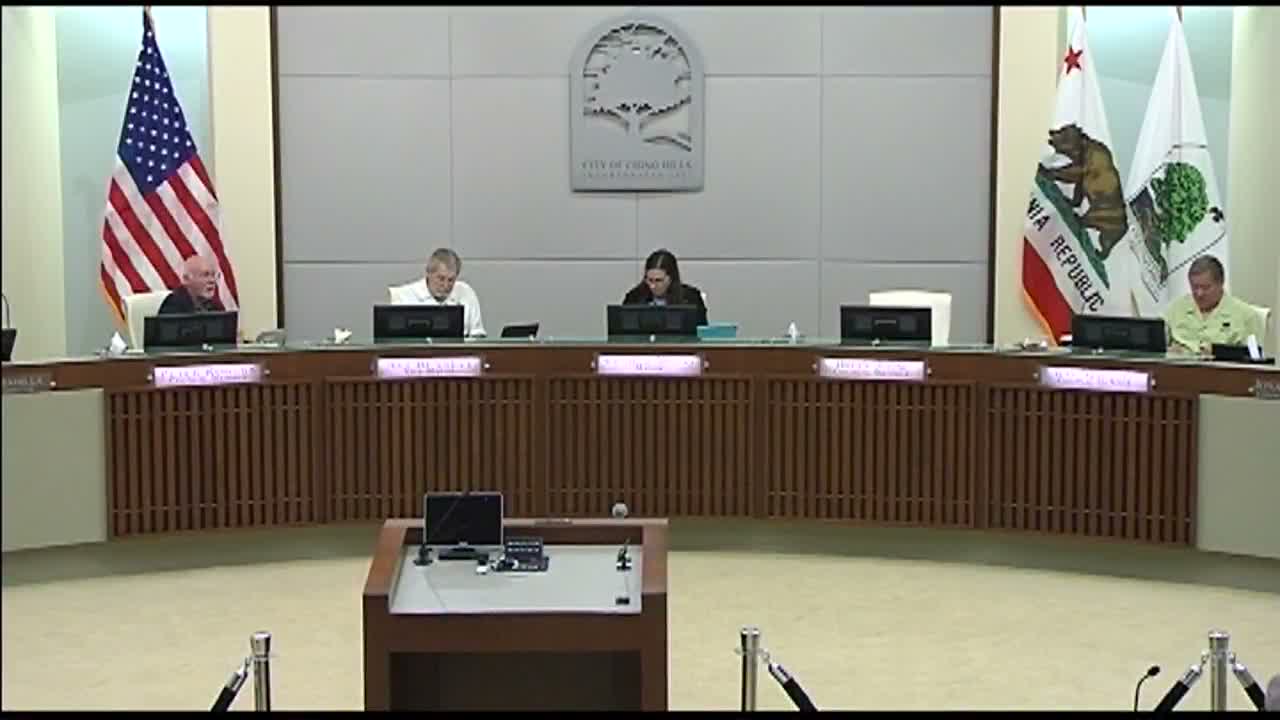
Chino Hills Council votes to introduce ordinance setting future council salary at $1,900 a month
Summary
After debate about time commitments and attracting future candidates, the Chino Hills City Council approved the first reading of an ordinance to set a possible future council salary at $1,900 per month under state law changes from SB 329. The vote was 4–0; a second reading is required before enactment.
Mayor Moran called the council to consider setting a future council salary under changes made by Senate Bill 329, and City Manager Montgomery outlined the state process that sets salary ranges by city population and limits automatic increases.
Montgomery said the state matrix allows Chino Hills — based on its population range — to set a monthly salary of $1,900 for a future council and described related provisions in Government Code section 36516 and 36516.5, including limits on automatic increases and options tied to Consumer Price Index adjustments.
Council members debated the proposal, framing it as a way to make service more accessible to people who cannot afford the time commitment without compensation. "People have no idea how much time we put in," Council Member Art said, arguing that the increase would help future candidates and noting prior councils skipped periodic increases. Peter Rogers said the change would help attract candidates and that nearby cities sometimes pay more.
Several council members emphasized that service is motivated by civic duty rather than pay. After discussion, Council Member Art moved to begin the two‑meeting ordinance process to set the salary at $1,900; Peter Rogers seconded. The first reading passed on a 4–0 vote.
Under state rules Montgomery cited, the change would apply to a future council after the next election and must complete a second reading and post‑enactment waiting period before taking effect.
The council's action was an introduction/first reading of an ordinance; a second reading and final adoption at a later meeting are required before the salary would be established.