Upland sets June 8 Prop. 218 hearing on water, sewer and recycled‑water rate adjustments
Loading...
Summary
The Upland City Council set a June 8, 2026 Prop. 218 public hearing and authorized staff to mail required notices for proposed water, recycled‑water and wastewater rate adjustments and a five‑year schedule; staff also recommended a 15% passthrough authorization for Inland Empire Utilities Agency charges. No rates were adopted tonight.
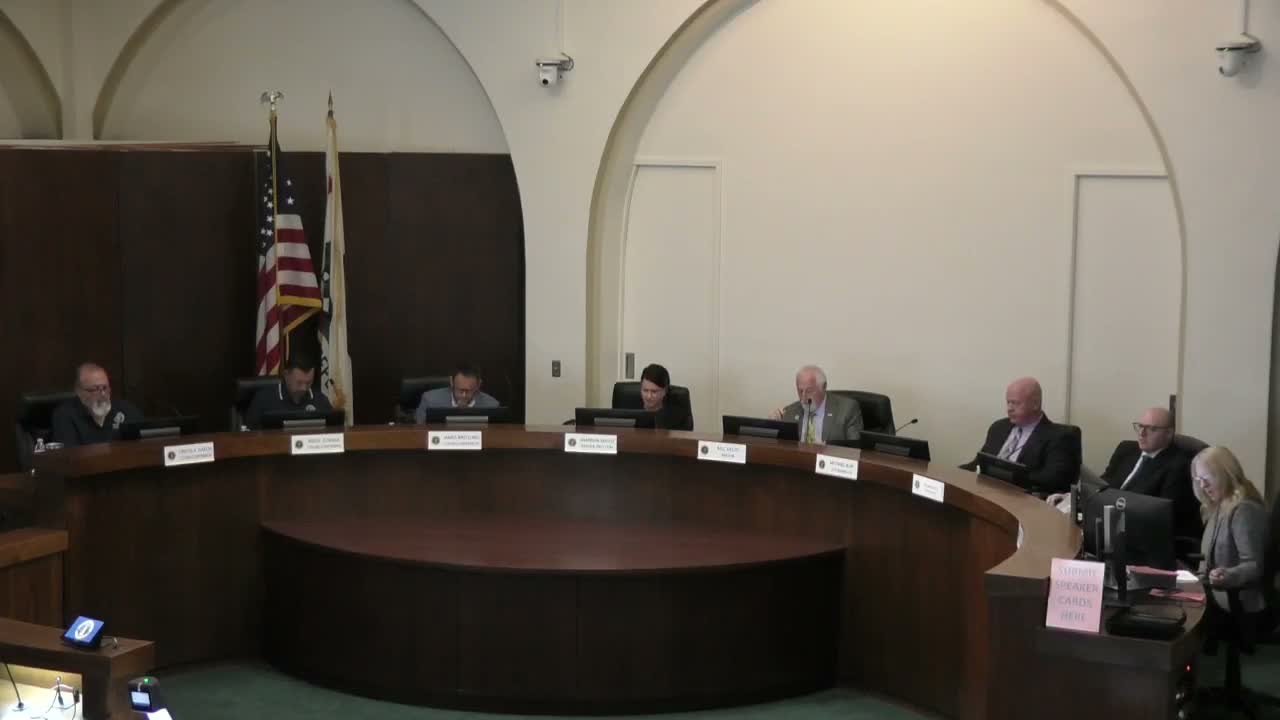
The Upland City Council voted unanimously on March 23 to set a Prop. 218 public hearing for June 8, 2026 and direct staff to mail the required notices for proposed adjustments to the city’s water, recycled‑water and wastewater rates.
Assistant City Manager Damian Arula said the action simply begins the public notification and protest process and does not adopt final rates. He and consultant Sudhir Pardiwala of Raftelis presented a comprehensive cost‑of‑service study that staff said ties proposed charges to system needs, aging infrastructure and changing regulatory requirements, including emerging federal and state standards for PFAS and other “forever chemicals.”
"We're authorizing tonight the mailing of the Proposition 218 notices that are included in the packet and, would go out to residents shortly thereafter," Arula said. "I want to make it clear that no rates are being considered tonight." Pardiwala, the study project manager, said the analysis aligns different customer classes with the costs of service and projects a first increment in July 2026 followed by annual adjustments, with an illustrative 5% revenue adjustment in later years.
The presentation laid out the city's utility portfolio and operational scope: roughly 64% of supply from groundwater, 19% surface water and 17% imported water; about 23,000 water meters citywide; 11 wells; 13 reservoirs; and 210 miles of sewer lines. Staff described new work on preventative maintenance, replacement schedules identified in recent master plans and ongoing monitoring programs — "we have 20,500 water samples taken ongoing monitoring to meet both state and federal drinking water standards," Arula said — and warned that treatment for PFAS and similar contaminants will add to costs going forward.
A central procedural element of the item addressed the relationship between the city and the Inland Empire Utilities Agency (IUA), which provides regional wastewater treatment and recycled‑water services. Arula said staff is recommending a five‑year pass‑through authorization that would allow the city to implement up to a 15% increase in IUA‑originated charges without running a separate Prop. 218 protest process for every IUA adjustment; the city would still mail the Prop. 218 notice and not mark up the pass‑through charge.
"We don't mark up a profit," Arula said. "This is a pass through."
Representatives from IUA told the council that IUA has been moving to shorter rate cycles and that some of its work — including large capital projects such as RP‑5 — has driven more frequent rate changes at the wholesale level. An IUA official said RP‑5 expansion and other upgrades have cost hundreds of millions of dollars and noted the agency is seeking financing options including SRF and WIFIA loans. The IUA representative added that the agency is exploring taking a more active role in the Prop. 218 process for its wholesale increases so residents can comment directly to IUA as well as to the retail city.
Council members asked about bill design and timing; staff said the current billing platform cannot yet separate the city's charge from the IUA pass‑through but that a new utility billing system is expected to provide that flexibility within 12–18 months. Arula and staff said the city will include clear bill messaging in the interim so customers can see which portion of their sewer bill reflects IUA charges.
Council member discussion touched on financial prudence and the risks of deferring rate adjustments. "Every time you've seen in the news different agencies where they've had 30, 60, 70% increases in the first year because they've delayed so long," Arula said, urging consistent and predictable adjustments to avoid sudden spikes.
The council's motion — moved by Council Member Garcia and seconded by Council Member Breitling — to set the public hearing and direct staff to prepare the Prop. 218 notices passed unanimously. Staff said notices will be mailed soon, a 45‑day public review period will follow, and written protests will be counted at the June 8 hearing; if a majority protest is not sustained, the council may adopt rates with proposed effective dates of July 1, 2026.
What happens next: staff will mail Prop. 218 notices, accept written protests during the 45‑day window and return on June 8 for the public hearing and possible adoption. IUA representatives said they will try to be available at the June 8 hearing to answer questions about wholesale charges.
Sources: Assistant City Manager Damian Arula; Raftelis consultant Sudhir Pardiwala; Inland Empire Utilities Agency representatives.