Get Full Government Meeting Transcripts, Videos, & Alerts Forever!
Get email alerts on the Public Safety Technology topic
No spam. Unsubscribe anytime.
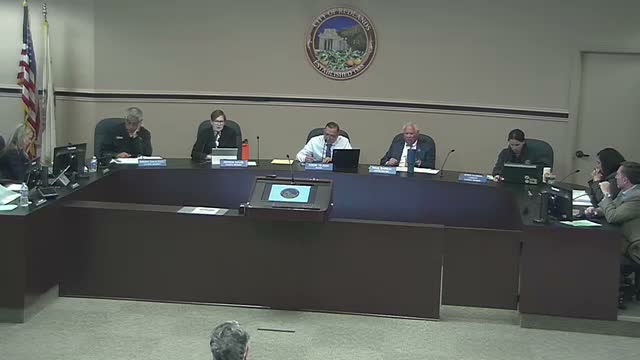
Council approves $1.16 million initial contract to modernize Redlands public-safety cameras
Summary
The council approved a multi-year, phased contract with CellPlan Technologies to replace the city’s aging public-safety camera system and wireless infrastructure (initial term $1,158,006.29; total with extensions up to ~$2.13 million); police and IT officials said new cameras and Genetec software will improve monitoring and investigations.
The Redlands City Council voted Nov. 5 to approve a phased, multi-year agreement with CellPlan Technologies to replace the city’s aging public-safety camera system and associated wireless infrastructure. The initial contract term is $1,158,006.29 with options that could raise the total to approximately $2,131,048.93 over additional extension terms.
IT manager Eric Owens said the current camera system has been in place for more than 15 years and is increasingly unreliable. Owens explained the procurement process (RFP, demonstrations by finalists) and said CellPlan’s Genetec-based solution and wireless design best met the city’s needs for a replacement. Interim Deputy Chief Jeremy Floyd said cameras are a force multiplier for the police department, helping prevent crime, support investigations and provide 24/7 monitoring.
Owens outlined a phased rollout: project planning and design in year one, server and software staging, wireless infrastructure completion, and replacement of roughly 30% of cameras in the first year with subsequent years covering the remainder. Council members emphasized the importance of budgeting and public-safety benefits before approving the contract by roll call.
The contract includes equipment, installation and maintenance services; staff said parts of the system were funded previously through grants and community donations but current upgrades require a city-funded procurement to modernize the network.