Get Full Government Meeting Transcripts, Videos, & Alerts Forever!
Get email alerts on the Historic Preservation topic
No spam. Unsubscribe anytime.
Council approves changes to historic-preservation appeals after heated public comment
Summary
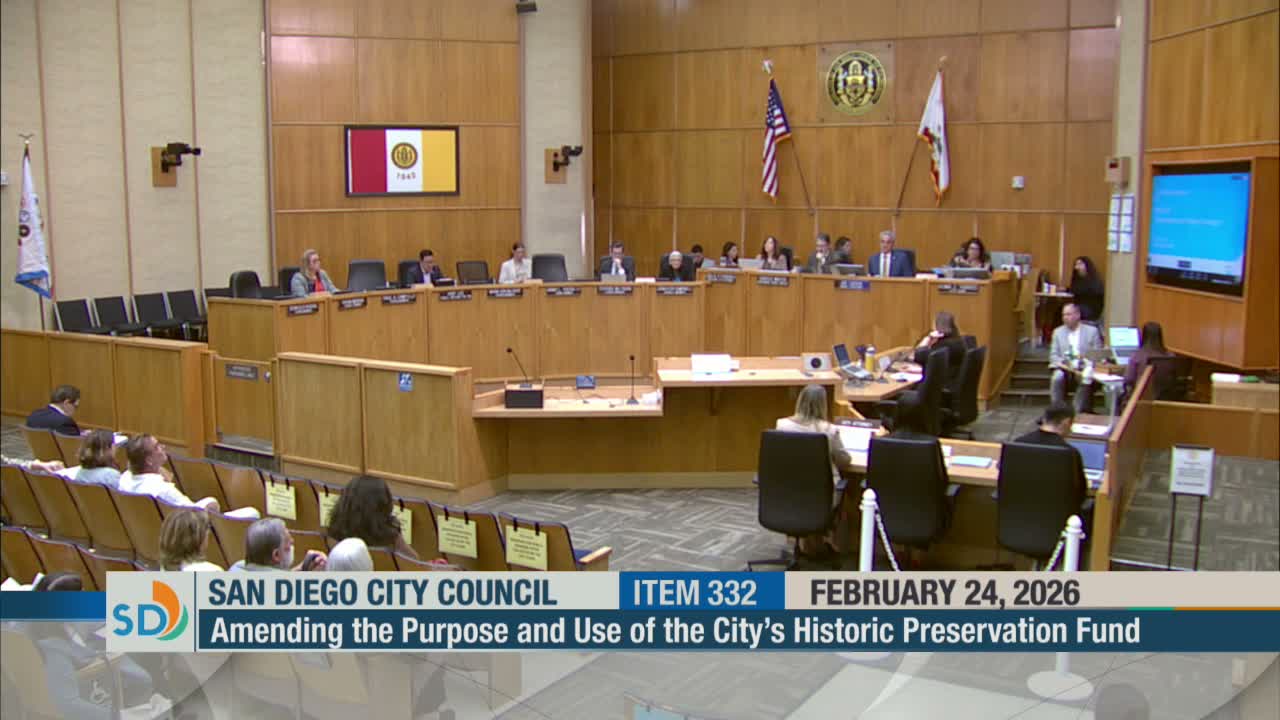
After hours of testimony for and against, the City Council adopted a set of targeted amendments to the city's historic-preservation code known as Preservation and Progress Package A, adding a new “findings not supported” appeal ground and directing staff to monitor implementation. Vote: 5-1.
A majority of the San Diego City Council voted Feb. 24 to adopt Preservation and Progress Package A, a set of targeted changes to the city's historic-preservation rules that staff said would improve equity, clarify noticing and appeals, and update administrative processes.
Kelly Stonko, deputy director for climate preservation and public spaces in the City Planning Department, presented the package as a focused update that would amend the historic preservation element of the general plan, refine land development code language, and repurpose the Historic Preservation Fund to support equity-centered projects.
"The goals of Preservation and Progress are to advance equity and preservation, ensure the Mills Act program is equitable and fiscally responsible, and protect historical properties and districts," Stonko said during the staff presentation.
The council's public hearing drew lengthy, often emotional testimony from preservation advocates, neighborhood groups and housing-industry representatives. Opponents pressed the council to remove a proposed new appeals ground (described in staff materials as a fourth finding: "findings not supported"), arguing it would allow political reversal of expert board designations and weaken protections for districts such as Ocean Beach. Supporters and development-industry speakers said the change would increase transparency and align San Diego with other jurisdictions where elected bodies make final designation calls.
Preservation groups urged additional environmental review and a full survey of affected neighborhoods before adopting changes they said could lead to demolition or loss of historic resources. Multiple speakers also recommended restoring a one-sided appeals right for parties challenging a board's decision not to designate, an item that staff removed from the package after earlier review.
Councilmembers discussed the tradeoffs between deference to the Historical Resources Board's technical expertise and the council's responsibility to be the final, accountable decision-maker. Councilmember Whitburn said experts can disagree and that elected officials must remain accountable for citywide policy. Council President Lacava said he would not support the inclusion of the new appeals finding, expressing concern about politicizing technical determinations.
The motion to adopt staff'recommended documents and ordinances passed 5-1, with Council President Lacava voting no. Councilmembers asked staff to track the use and effects of the new "findings not supported" appeal and report back in the Historical Resources Board's annual update.
What happens next: The council adopted resolutions and ordinances implementing Package A. Several community groups asked the council to pause final action pending a broader environmental review and completion of neighborhood surveys; the council did not adopt a pause but instructed staff to provide monitoring and reporting on outcomes.
Votes at a glance: Adoption of Preservation and Progress Package A — outcome: approved, 5-1 (Lacava opposed).