Get Full Government Meeting Transcripts, Videos, & Alerts Forever!
Get email alerts on the Ethics And Governance topic
No spam. Unsubscribe anytime.
Public speakers urge scrutiny of city attorney amid ethics and licensing allegations
Summary
Dozens of residents urged National City officials to scrutinize the city attorney’s conduct, citing alleged conflicts of interest, claimed failures in the cannabis licensing process and requests for disclosure about outside counsel; the council recessed into closed session to review the attorney’s performance.
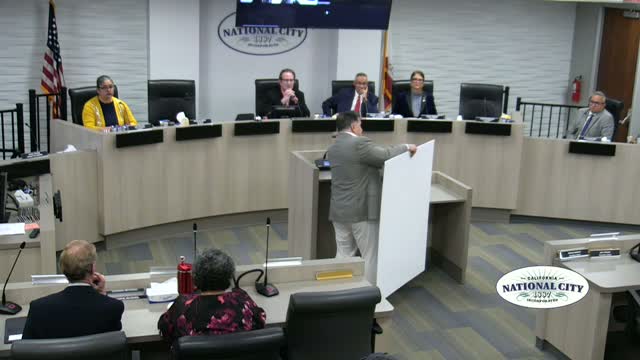
Dozens of residents used the public-comment period to press the National City Council to scrutinize the city attorney’s conduct and the city’s handling of the cannabis licensing process.
Several speakers directly tied their concerns to the attorney’s work on the city’s legal matters. "He refuses to acknowledge his mistakes," said Laura Wilkerson, who alleged the city attorney "enabled and defended a fraudulent system in the cannabis licensing" and said the city had not audited other applications to ensure compliance. Wilkerson said the city’s handling had deprived honest local businesses of opportunities and contributed to litigation.
Other commenters raised conflict-of-interest concerns. "It’s unethical for Mr. Schultz to have his current or former law firm represent National City in some of these cases," Alicia Morrison said, urging the council to consider that when evaluating the attorney. Maria Serverson asked whether the city attorney continues to be pictured on the Devaney Pate Morris and Cameron website and requested disclosure of any ongoing financial or pension relationships with that firm.
Michael Aguirre and other speakers also pressed for clarity about specific records. Aguirre said an email that officials earlier said “didn’t exist” had been produced and asked the city attorney to identify when he received it. Several speakers argued that simply sending a document to outside counsel should not automatically create an attorney-client privilege that would block public-records disclosure.
The concerns were raised across multiple commenters and were tied to active litigation and administrative appeals. Speakers urged council members to weigh the alleged misconduct and alleged failures in oversight in the city attorney’s performance review. The city attorney later led the council into closed session to discuss the attorney’s performance and other personnel and litigation matters.
The council went into closed session to discuss item 5.1, the city attorney’s performance review; no public action on that review was recorded in the meeting minutes released during the public session.