Get Full Government Meeting Transcripts, Videos, & Alerts Forever!
Get email alerts on the Public Safety topic
No spam. Unsubscribe anytime.
El Cajon considers charging congregate-care facilities for excessive 911 calls to curb misuse
Summary
City staff proposed charging congregate-care facilities for 911 responses above a bed-normalized threshold after finding 20 facilities generated about 2,700 calls last year and that education alone failed to reduce calls. Council directed staff to engage operators and returned with a preferred threshold (1.35× median) and a possible $486-per-call fee as a behavioral incentive.
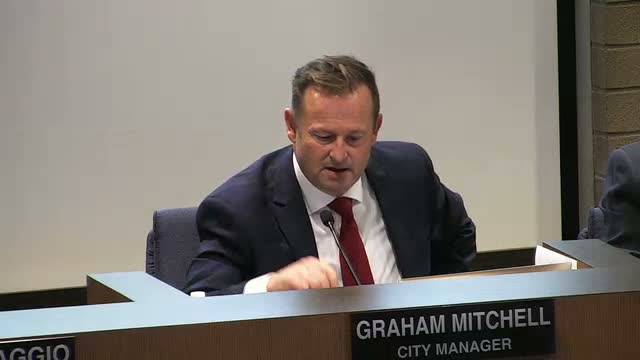
City Manager Graham Mitchell told the El Cajon City Council that 20 licensed congregate-care facilities in the city generated more than 2,700 calls for service last fiscal year — roughly 15% of the fire department’s total responses. Staff analysis found variation across operators: some facilities had as few as 10% non-emergency calls while others reported up to 69% non-emergency calls in 2022.
Staff presented three fee-model options designed to shift facility behavior by tying costs to calls above a bed-count-normalized threshold. The city estimated a cost-to-respond of $486.83 per call and modeled options that would affect between 3 and 10 of the facilities depending on the threshold. Under one staff option, facilities exceeding 1.25× the median would pay the city for every call beyond that threshold; another option used a 1.5× median threshold; a third would bill for every call above the median at a reduced per-call rate.
Council members raised legal, equity and operational concerns. Councilmember (name used in the meeting as) Steve Gobel asked whether property owners could challenge a fee as illegal; the city attorney said such challenges were possible and would require legal analysis. Multiple council members expressed concern that facilities could pass fees to residents, but staff and others noted most residents are Medi-Cal or Medicare beneficiaries and federal rules would constrain direct pass-through for those payers. Councilmembers also asked whether fees would be applied per fiscal year and whether an appeals process could be established for facilities to contest charges they say were true emergencies.
Several council members argued that outreach and education had not produced sustained results — staff had previously engaged operators in 2022 with limited long-term effect — and supported a fee as a behavioral “stick.” Deputy Mayor Ortiz and other members favored an initial standard of 1.35× the median annual calls per bed (the median used in staff analysis was discussed during the meeting) with a $486-per-call fee applied to calls above that threshold and a plan to revisit the metric after the first year. Council also asked staff to build an administrative appeals mechanism and to consider the annual adjustment of the per-call cost.
City Manager Mitchell said staff will start structured outreach to facility operators to solicit feedback, identify operational fixes they can adopt, and return with a formal policy recommendation and legal analysis. The council’s direction was procedural: engage operators and return with a detailed ordinance or fee schedule rather than adopting a fee at the meeting.
Next steps: staff will contact congregate-care operators, solicit their input, and prepare a formal proposal for council consideration, including an appeal process and legal review.