Get Full Government Meeting Transcripts, Videos, & Alerts Forever!
Get email alerts on the Municipal Budget topic
No spam. Unsubscribe anytime.
Redlands adopts two-year budget for FY2025-26 emphasizing public safety, deferred maintenance
Summary
The Redlands City Council adopted the city manager'proposed two-year budget for fiscal years 2025-26 (Resolution 8598), using fund balance to finance capital and staffing priorities including public-safety personnel, a sustainability coordinator, and continued Measure T spending oversight.
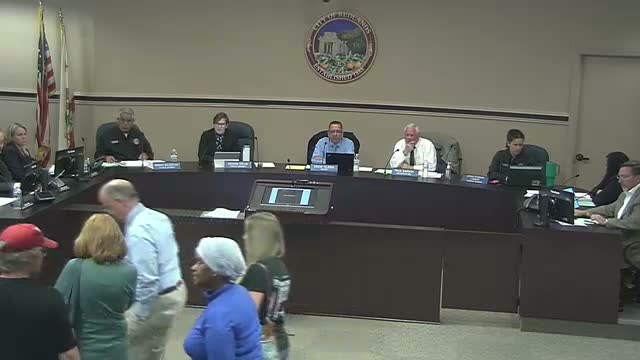
The Redlands City Council adopted the city manager'proposed biennial budget for fiscal years 2025 and 2026 and approved Resolution 8598 after staff presented revenue forecasts and priorities.
City Manager Charles Duggan and Finance Director Danielle Garcia described a budget that uses some of the city's elevated ending fund balance to invest in deferred maintenance, capital projects and modest staffing increases. The package includes funding for four police officers and one sergeant assigned to homelessness response, a sustainability coordinator, vehicle and equipment replacements, and capital work on streets, parks and city facilities.
"We have significant one-time resources this year and we are proposing to invest them in our infrastructure and public safety," Duggan said. Finance staff projected property tax growth at a moderate pace and conservative assumptions for sales tax and investment income.
The Measure T Oversight Committee reported it found the allocation of Measure T revenue for the proposed budget aligned with the promises to voters—restoring positions cut during the pandemic, addressing homelessness, funding parks, safety facilities and animal services—and recommended adoption. The committee noted that continued use of Measure T for ongoing personnel costs could constrain one-time capital spending and urged careful monitoring.
Councilmembers discussed the risks of drawing down reserve balances, the need to prioritize preventive maintenance (some of which remains unfunded), and possible future revenue options. Mayor Tejeda and others asked staff to research a potential parcel tax on warehouses; staff said such an initiative would require significant lead time and possibly a two-thirds voter threshold if structured as a special tax.
The council approved the budget on a unanimous roll call. The adopted biennial budget provides the city with a fiscal roadmap for the next two years while leaving room for mid-cycle adjustments if economic conditions change.