Get Full Government Meeting Transcripts, Videos, & Alerts Forever!
Get email alerts on the Legislative Platform topic
No spam. Unsubscribe anytime.
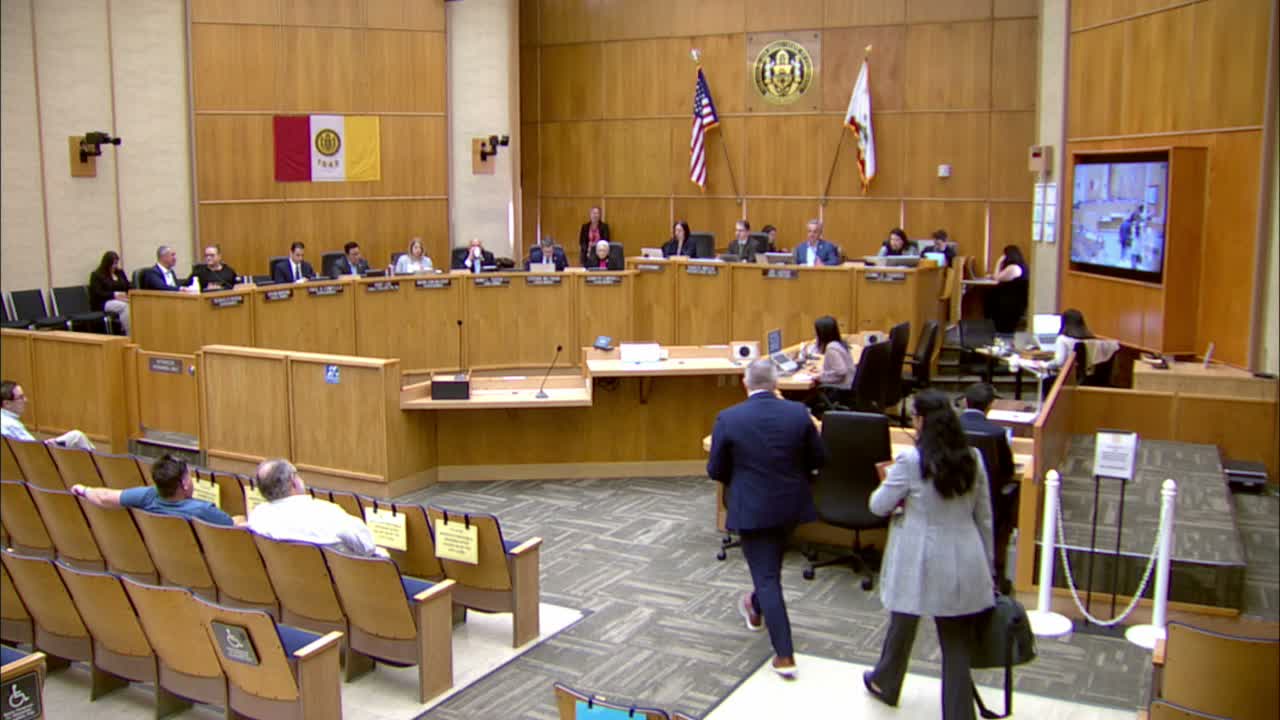
San Diego council adopts updated 2026 legislative platform after heated debate over license-plate readers
Summary
The City Council voted 6–3 on Dec. 17 to adopt an updated 2026 legislative platform after a contentious debate and amendments focused on automated license plate readers (ALPRs); council altered staff language to preserve San Diego's control over ALPR deployment and regulation and added a clause opposing federal intervention.
San Diego’s City Council on Dec. 17 approved an updated 2026 legislative platform after several hours of public comment and council debate that centered on a new provision about automated license plate readers, or ALPRs. The council adopted the final package 6–3, with Councilmembers Elo Rivera, Moreno and Foster recording no votes.
The platform — presented by Walt Bishop, the city’s director of government affairs — lays out the city’s state and federal advocacy priorities for the year, including support for housing bonds, funding for transit agencies, protections for immigrants, and language addressing climate, utilities and public-safety technology. Bishop told the council his office added language to the platform to protect the city from state preemption while allowing room for local debate: “My goal with this language…is to be able to protect against statewide preemption on taking away your ability to regulate this technology,” he said.
The fiercest debate revolved around Section 5, item 30, which initially read as an opposition to restrictions on ALPR technology. Dozens of residents and advocates urged the council to remove or rework that line during the public-comment period, saying ALPR systems raise privacy and civil‑liberties concerns and citing reported vendor missteps in other jurisdictions. “Why would we want to tie our hands and all San Diegans to a technology that has already been abused and will be abused again?” said Nancy B., who identified herself with San Diego Families for Justice during public comment.
In response, the council negotiated multiple wordings and friendly amendments over two rounds of debate. The motion that carried replaced the original language with a provision directing the city to “support legislation that preserves San Diego’s control over its deployment and regulation of automated license plate reader technology to ensure robust oversight, transparency and privacy protections,” and added a parallel federal item intended to prevent federal intervention in local ALPR systems.
Councilmembers described different rationales. Supporters said the revised language is narrowly tailored to protect local regulatory authority — and to preserve practices the council views as appropriate for San Diego — while opponents argued any platform line that appears to promote ALPR use undermines months of public concern and jeopardizes civil‑liberties protections. The council considered, but ultimately rejected, a motion to strike the ALPR language entirely.
Councilmember Campillo moved the staff recommendation as amended and the platform passed as amended. The clerk recorded the final vote as 6 in favor and 3 opposed.
The adopted platform will be used by the city’s government affairs staff to guide San Diego’s lobbying and advocacy in Sacramento and Washington, D.C., during 2026. Bishop said his office will continue to consult council offices before taking positions on specific bills.
What’s next: the platform provides broad guidance; any future state or federal bill affecting ALPRs or other items included in the platform will still come before the council for particularized review if members request it. The council will also continue committee-level and full-council discussion for specific pieces of legislation as they appear in the legislative process.