Get Full Government Meeting Transcripts, Videos, & Alerts Forever!
Get email alerts on the Budget topic
No spam. Unsubscribe anytime.
San Diego council opens FY2027 budget season; public urges protecting libraries, parks and equity programs
Summary
Council members and the Independent Budget Analyst framed a $100–$120 million FY2027 structural deficit and a push for difficult decisions. Residents urged preserving library and recreation hours, funding opioid prevention and cannabis equity supports, and voiced concerns about leases, contracts and payroll transparency.
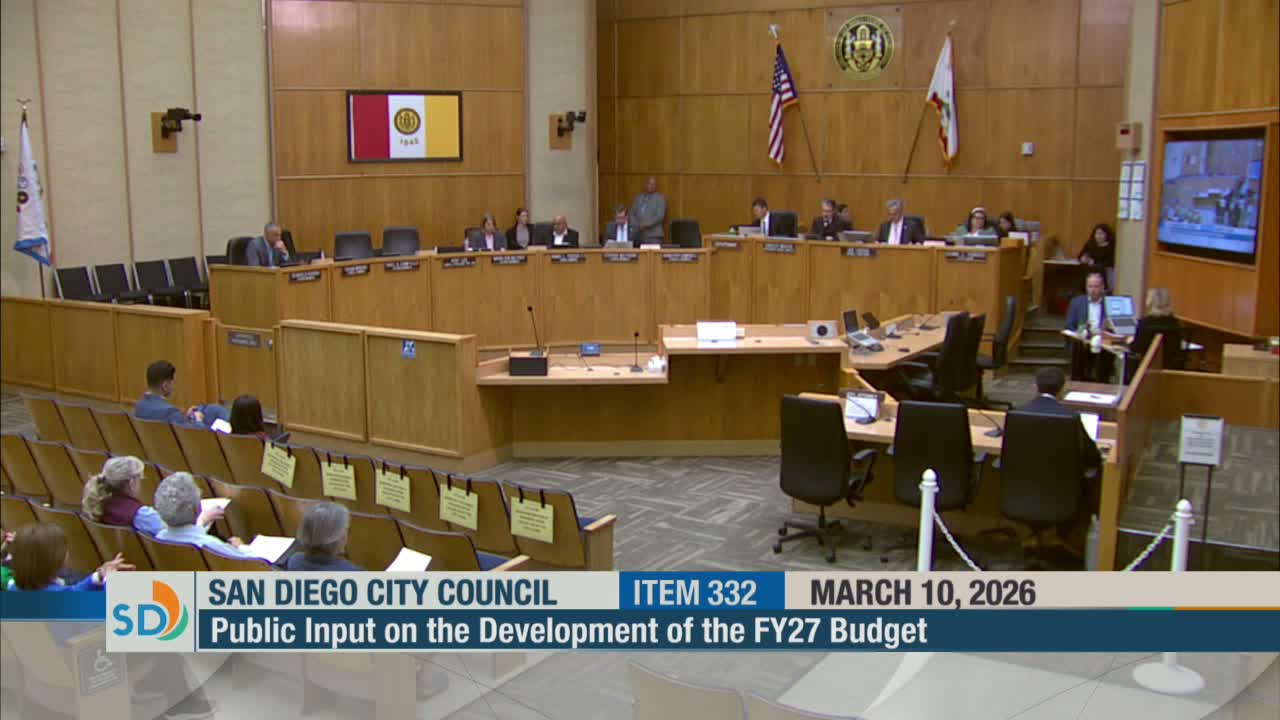
The San Diego City Council began formal budget deliberations March 10 with an evening hearing at which the Independent Budget Analyst and council leaders described a structural FY2027 budget deficit of roughly $100 million to $120 million and urged public input on where to preserve services and where to propose reductions.
Charles Modica’s office summarized the city’s fiscal challenge: revenue choices are limited in the short term, the city receives a smaller share of local tax dollars compared with peer cities, and deferred maintenance and previously tapped one‑time funds magnify the problem. “We need to ensure our expenditures match the revenues we already have in hand today,” IBA representatives told the council.
The council also received a training briefing on zero‑based budgeting (ZBB) from the IBA and the Department of Finance. The training described how ZBB builds budgets from the bottom up and how San Diego currently applies ZBB principles to nondiscretionary accounts, information technology, hourly positions and fixed fringe benefits. Ben Battaglia, director of finance, said the department has conducted a targeted ZBB review of general‑fund external contracts and services; preliminary results showed some reductions but also projected increases driven by inflation and contractual cost escalations.
At the evening public hearing, dozens of speakers urged council members to protect libraries and recreation centers, which multiple commenters called “core services.” Advocates for the San Diego LGBT Community Center asked the council to continue funding substance‑use disorder prevention and education from opioid settlement proceeds. Opinions on the proposed expansion of the city’s cannabis Social Equity and Economic Development (SEED) program were split: several speakers urged expansion and technical assistance funding to help impacted small business owners enter the market, while others warned that past equity programs statewide have struggled to convert applicants into operating businesses and urged fiscal caution given the city’s budget strain.
Other public commenters raised long‑standing local concerns about leasing of public land (Torrey Pines Gliderport), management of Liberty Station ground leases and allegations raised in public comments about unusually large “other pay” entries on Transparent California for some city employees. The council did not act on those allegations in this meeting; public comment was entered into the record for follow‑up.
Council members encouraged community participation in the budget process, announced additional public hearings (including May 4 and May 18) and noted the IBA’s public “budget crash course” on March 24 to help residents engage effectively. Council Member Henry Foster, chair of the budget committee, reiterated the need for equity to guide reductions and said discussions must balance fiscal responsibility with protecting core services.
Official votes at the March 10 meeting included passing the day’s ceremonial proclamations (9–0) and approval of the consent calendar with several recorded no votes on specific items. The council will consider the CIP and departmental budget proposals in the weeks ahead as staff and the IBA refine estimates and options for the FY2027 proposed budget.
The city encourages residents to complete the mayor’s budget survey and to attend upcoming hearings. The IBA also published materials and will host a public crash course to help San Diegans understand budget choices.