Get Full Government Meeting Transcripts, Videos, & Alerts Forever!
Get email alerts on the Water Rates topic
No spam. Unsubscribe anytime.
Upland council adopts 4% CPI adjustments for water, recycled water and sewer rates effective Nov. 1
Summary
After a public hearing and staff presentation outlining aging reservoirs and deferred capital projects, the Upland City Council voted unanimously to adopt CPI-based adjustments to water/recycled water and sewer fee schedules effective Nov. 1, 2024.
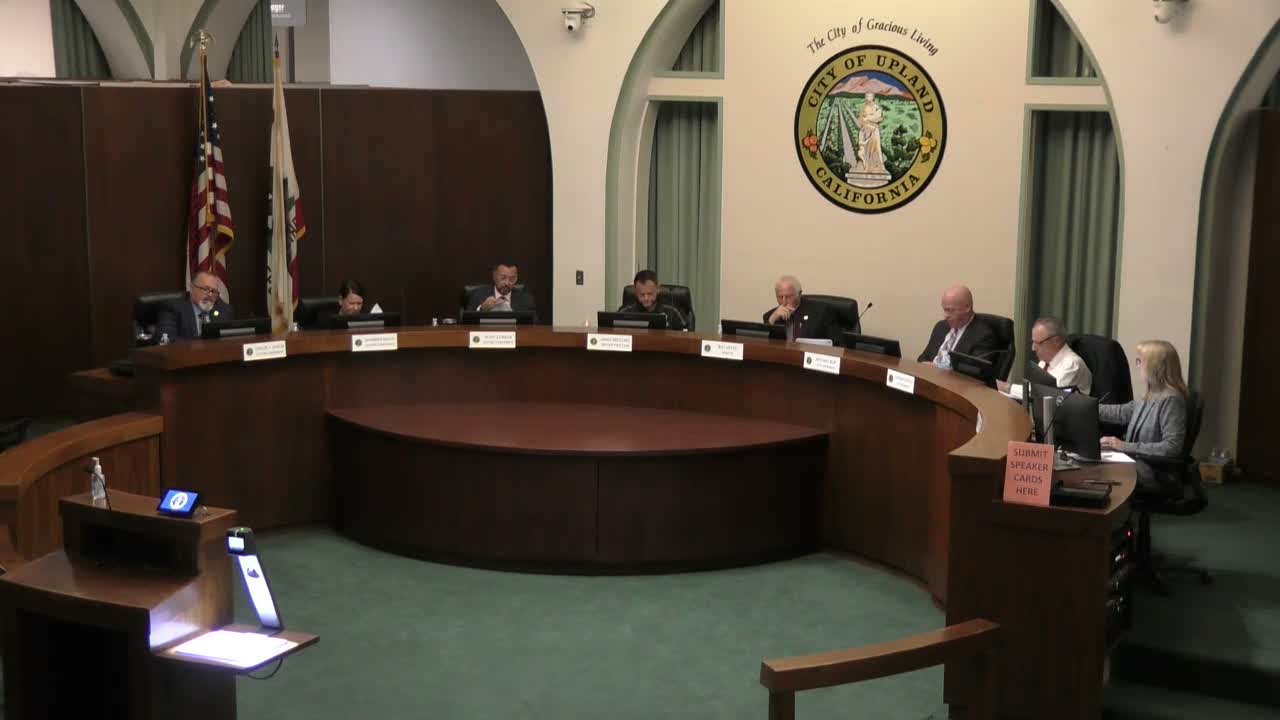
The Upland City Council on Oct. 14 voted unanimously to adopt revisions to the city’s water, recycled-water and sewer fee schedules that include a 4% Consumer Price Index adjustment, effective Nov. 1, 2024.
Interim Public Works Director Chris Elenis told the council the city’s water budget is $57,368,000 and the sewer budget is $16,626,000. He said the city operates on a ‘‘zero-sum’’ rate model meaning revenue must cover administrative, operations and capital costs. Elenis said staff is recommending the CPI adjustment after several years in which periodic increases were not implemented, creating compounding shortfalls and delaying necessary capital projects, including reservoir replacements.
‘‘We have 39 approved capital projects in the CIP,’’ Elenis said. ‘‘Reservoir replacement costs are high; one replacement is likely to be in the neighborhood of about $18,000,000.’’ He explained that the city’s reserves were set at a 90‑day policy and staff intends to revise that to 180 days to reflect asset age and risk.
During council questions, members pressed staff on pass-through charges from wholesale providers and the choice of inflation window. Elenis said the city chose a May‑to‑May measure using Bureau of Labor Statistics data for the Riverside‑San Bernardino area and emphasized that some costs — particularly infrastructure maintenance, sampling and lab work, and replacing aging storage — drive much of the increase.
Members of the public raised concerns about rate equity and transparency. A City Clerk report showed six written protests had been received; the clerk said the number required to trigger a Proposition 218 majority protest would be 10,080 property owners and concluded a majority protest did not exist.
Council then made two motions: to adopt the resolution revising water and recycled-water service rates and to adopt the resolution revising the sewer fee schedule, both effective Nov. 1, 2024. Both motions passed on unanimous voice votes.
The council and staff said the rate adjustments are intended to maintain essential services and reduce the risk of catastrophic failures by funding planned capital projects. The city manager announced additional public engagement opportunities on related revenue measures later this month.