Metro Atlanta leaders urge Kemp to veto bill that would make elections nonpartisan in five counties
Loading...
Summary
County executives and state representatives from Metro Atlanta urged Gov. Brian Kemp to veto House Bill 369, saying the measure—amended in the Senate and applied only to five large counties—would undermine local control and discriminate against diverse jurisdictions including DeKalb.
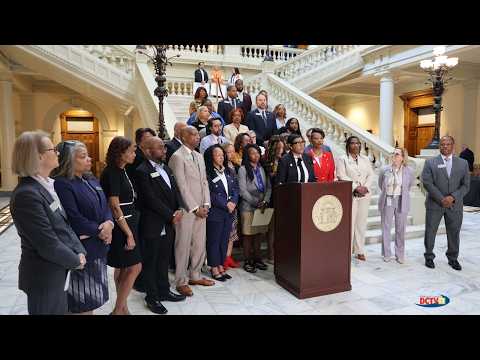
State Rep. Carla Dreener, chair of the DeKalb House delegation, opened a coordinated appeal at the Georgia State Capitol, saying House Bill 369 was transformed by a Senate amendment without full House debate and now “targets specific counties, including DeKalb,” by changing how local elections are structured.
The gathering of county chairs and legislative delegation leaders sought to persuade Gov. Brian Kemp to veto the measure. Lorraine Cochran Johnson, chief executive officer of DeKalb County, told lawmakers and attendees that HB 369 “proposes elections within 5 counties become nonpartisan,” and argued the change should not be applied selectively to Clayton, Cobb, DeKalb, Fulton and Gwinnett counties.
Why it matters: Speakers said the five counties represent a substantial share of Georgia’s population and economy and that imposing a different election system on a small set of jurisdictions would fracture longstanding local authority. “If this is good policy, it should be applied across all 159 counties,” Dreener said, asserting that the five counties represent nearly 4,000,000 people and a large portion of the state’s economic activity.
County leaders framed the objection as both a process and equity issue. Dr. Alika Anderson Henry, chairwoman of Clayton County, said HB 369 “creates 2 different election systems in the state of Georgia” and criticized the lack of “meaningful collaboration with the communities being impacted.” Kolata Harrell, chairwoman of Henry County, added that the bill mandates a transition to nonpartisan contests for certain county offices in the selected counties beginning in 2028, and said imposing that change without local input weakens local governance.
Several speakers tied the bill’s origin and amendment process to their concerns. State Rep. Dr. Jasmine Clark, chair of the Gwinnett County delegation, said the measure “came back to life in a food truck bill” and called it a “zombie bill” that aims to disenfranchise voters in the metro counties; the remark underscores the delegation’s argument that the measure’s current scope differs sharply from its original subject.
Leaders from Cobb and Fulton counties also spoke. Lisa Cupid, chairwoman of the Cobb County Board of Commissioners, noted Cobb’s population and economic assets while urging collaboration with state leaders and rejecting targeted changes. Representative David Wilkerson, Cobb’s delegation chair, closed the remarks by thanking participants and asking attendees with questions to contact county or delegation chairs.
No formal votes or motions were taken during the gathering; the event was a coordinated public appeal urging the governor to veto HB 369. Organizers said they would continue outreach and invited constituents to contact local delegation leaders for follow-up.
The TV-style, public appeal drew on repeated themes: process transparency, equal treatment across counties, and the need for local input into changes that affect how residents elect county officials. The group urged Gov. Kemp to reject the bill or to apply any policy change uniformly across the state rather than singling out the five large metro counties.