Get Full Government Meeting Transcripts, Videos, & Alerts Forever!
Get email alerts on the Housing topic
No spam. Unsubscribe anytime.
City presents 2025 Annual Report on Homes: 8,782 permits in 2024 but affordable production lags RHNA goals
Summary
City Planning reported 8,782 new home permits in 2024, and 2,285 ADU permits; just 1,062 (12%) were deed-restricted affordable. Councilmembers and community speakers pressed for strategies to produce more affordable and moderate-income homes in high-resource areas and for better data transparency.
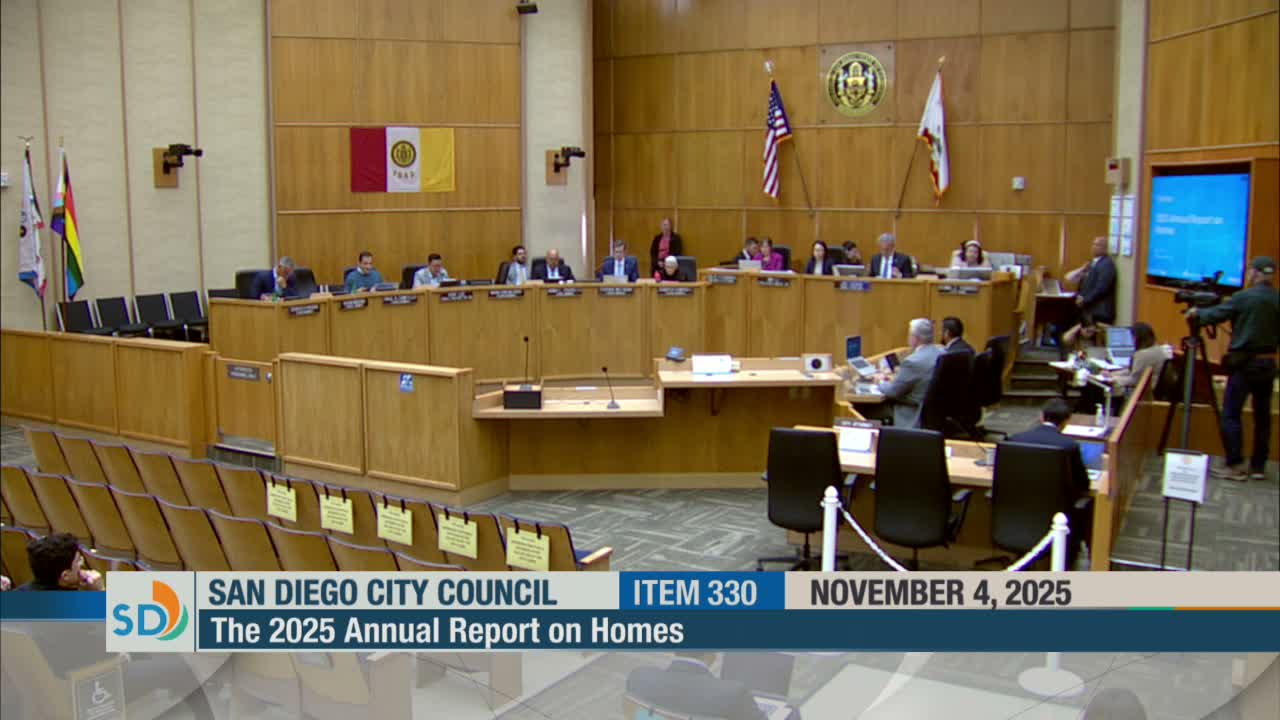
City Planning presented the 2025 Annual Report on Homes on Nov. 4, telling the council that calendar-year 2024 saw 8,782 new homes permitted citywide and a sharp increase in accessory dwelling unit (ADU) permits.
Sam Solis, senior planner, said the city issued 8,782 new home permits in 2024, including 2,285 ADU permits — about 26% of total permits that year. Of the 2024 permits, staff reported 1,062 deed-restricted affordable homes, or roughly 12% of the total permitted homes.
City Planning highlighted that most ADU permits were concentrated in Clermont Mesa, North Park and Southeastern San Diego, and that programs such as the affordable-home density bonus and Complete Communities Solutions contributed to 2024 production. Solis noted the city is on track to permit more permanent homes than in prior years but that affordable-home production remains behind RHNA (Regional Housing Needs Allocation) targets.
Independent Budget Analyst Amy Lee said the IBA’s deeper dive showed swings between 2022 and 2023 in production driven by program use, with density bonus activity powering much of the affordable production in prior years. The IBA flagged that inclusionary housing produced only one unit in 2024 and recommended continued monitoring.
Public commenters and councilmembers voiced concerns about the concentration of affordable housing in low‑resource areas, the limited share of deed-restricted units in high and highest resource areas, and the need for more detailed pipeline and demolition data. Kathleen McLeod, an oversight committee member for a local settlement on concentrated poverty, asked for a separate report on tax-credit applications so communities can track potential future permits.
Councilmembers asked staff whether the city is coordinating with regional transit agencies, how the city will measure whether ADU and density-bonus reforms continue to produce housing, and whether RFPs and community-plan updates should be used to increase capacity in high‑resource areas. Heidi Pomsloom, City Planning Director, said the department is expanding citywide nexus studies, preparing land‑use updates, and will continue community-plan updates to increase capacity where legally possible.
Staff noted limitations: building permits do not always indicate whether projects are for sale or rent; the city does not collect ownership-intent at permit issuance. Meeting participants pressed for more detailed rent‑survey data, demolition counts and tracking of unexpended funds dedicated to community facilities.
The agenda item was informational; no council motion was required. Staff said they will continue monitoring housing program usage and return with data to help inform policy decisions.