Get Full Government Meeting Transcripts, Videos, & Alerts Forever!
Get email alerts on the Surveillance Alpr topic
No spam. Unsubscribe anytime.
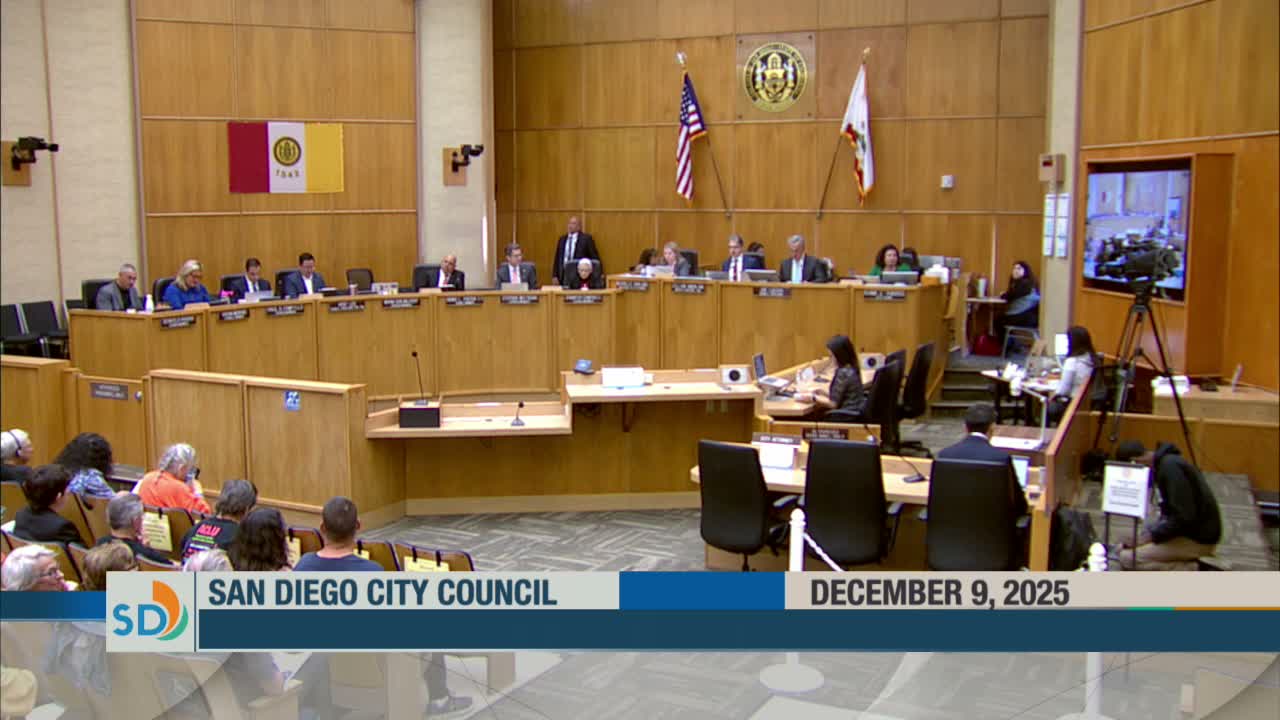
San Diego City Council approves continued use of license‑plate readers after hours of public testimony
Summary
After more than six hours of public comment and council deliberation, the City Council voted to keep the city’s automated license‑plate reader (ALPR) and related smart‑street‑light use policies in place, approving updates that require weekly audits and vendor notification to city officials for any federal data requests. The ALPR vote was the most contentious, passing narrowly 5–3.
The San Diego City Council voted to keep the city’s ALPR and smart‑street‑light use policies in effect on Dec. 9 after a prolonged public hearing that drew over 180 speakers and intense debate among councilmembers. The council approved the surveillance package that included updated auditing and vendor notification commitments; the final vote on ALPR‑related policy language passed 5–3.
The council’s action followed an SDPD presentation describing policy clarifications, security certifications and stronger auditing for ALPRs and smart street lights. SDPD representatives told the council they have tightened access controls and auditing practices, and that each ALPR search must be logged with a valid case number. SDPD said it would suspend city ALPR access if it found evidence federal agencies had improperly obtained the city’s data.
The meeting’s public comment period ran for hours and split between advocates who urged discontinuing the contract with the private vendor Flock Safety and community members, business leaders and victims’ advocates who described cases in which ALPRs and smart street‑light video produced evidence or led to arrests. Supporters cited examples including recovered stolen vehicles and investigations that led to arrests in violent cases; opponents cited documented instances elsewhere where ALPR data was shared with federal agencies, data‑security incidents, and the company’s record in other jurisdictions.
Councilmembers pressed SDPD and the vendor for enforceable commitments. City staff and the vendor agreed to add a written requirement that any subpoena or warrant seeking city ALPR data would be routed to and documented with the city attorney and police chief, and the department committed on the record to shut down access if the city discovered federal overreach or other violations of state law.
The council also required that audits be performed at a higher cadence than the prior quarterly standard: SDPD agreed to weekly audits of ALPR searches and to publish monthly summaries of those audits. The updated use policy language will be incorporated into the city’s existing contract with the prime vendor and apply to subcontractors through required contract “flow‑down” provisions.
Councilmember comments captured the split. Supporters said the technology is a force multiplier for an understaffed department and cited recent cases where ALPRs helped locate suspect vehicles, recover property and aid homicide or assault investigations. Opponents said the vendor had a problematic record elsewhere and argued that potential misuse — especially in the current federal climate — posed unacceptable risks to immigrant and other vulnerable communities.
Council President Lacava said the city must balance public safety benefits with the need to protect civil liberties. The measure passed after councilmembers amended the policy to include a 24‑hour vendor notification requirement for federal requests and the weekly audit requirement; the final ALPR‑related vote was recorded as 5 in favor and 3 against.
What happens next: SDPD and city procurement staff will incorporate the revised use policy language into city contracts and pursue the promised operational changes, including weekly audits and written vendor attestations. Council members who opposed the action said they will continue to press for further contract and oversight reforms, and some members urged initiating an RFP to evaluate alternative vendors in the coming year.
Quotes illustrating the positions: “If federal government has access to our data or Flock gives them access to our data, we would shut it down,” SDPD staff said in response to council questions. “We have a responsibility to protect every participant’s free speech rights,” the council president said during meeting management remarks.
The council’s vote preserves the city’s ALPR capability while adding clearer, council‑approved guardrails and increased audit reporting intended to increase transparency and limit third‑party access.