Get Full Government Meeting Transcripts, Videos, & Alerts Forever!
Get email alerts on the Budget topic
No spam. Unsubscribe anytime.
RSU 60 board workshop narrows 2027 budget choices as members debate reading program and special-education costs
Summary
Board members at an RSU 60/MSAD 60 workshop on March 24 debated a target percent for the 2027 budget, weighing a proposal to fund a new reading curriculum against a roughly $400,000 special-education shortfall and districtwide salary increases.
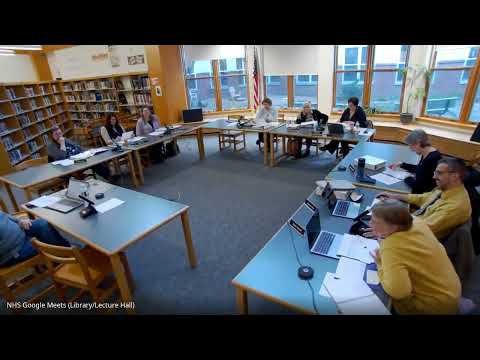
Board members of RSU 60/MSAD 60 met in a budget workshop on March 24 to narrow options for the district’s proposed 2027 budget and to give administrators a single target figure for final work.
A board member said the board should aim for a 3% increase in school expenses, adding: “My my preference is to be at 3% when it comes to, school expenses. Not 5.15, but 3%.” That proposal explicitly included funding for a reading curriculum as part of the 3% target.
Board member Nancy Sewell presented a spreadsheet modeled on a 2.9% CPI increase as a starting point for comparing category-by-category differences with the administration’s proposed budget. “I increased each of them by 2.9%,” Sewell said, describing which budget categories were substantially over that benchmark and where the board might look to whittle costs.
Allison Verlee, who raised the special-education line-item, told colleagues the special-education category is roughly $400,000 above the suggested benchmark and that approximately $357,000 of that is salaries and wages under contract, with only limited flexibility to cut those specific amounts. A board member summarized administration’s earlier presentation saying salaries and benefits had risen about $1.6 million districtwide, affecting regular instruction, special education, support staff and transportation.
Members debated how different percentage targets translate to taxpayer impact: examples discussed included a suggestion that a 3.75% expense increase would translate to about a 7.22% increase to taxpayers and 3.95% to about 7.6%, while others noted low-end modeling near 2.9%. Several members said giving the administrative team a clear target “under 4%” would allow the team to return with specific impacts tied to staffing and programs.
The reading curriculum was a recurring focus. Board members noted a $100,000 pilot line already in the budget and debated whether full implementation would cost about $400,000 (as one member stated) or $500,000 (an earlier estimate). One board member said, “I do want us to try to get that curriculum in the hands of teachers fully this coming school year,” while also emphasizing reluctance to fund it if it required larger class sizes or reduced student resources.
Members also identified other cost centers where modest savings could be sought without cutting instruction, including technology (contracted software and 1:1 devices) and certain transportation changes. The board asked administration to return quickly with scenarios that meet the discussed target so the board can weigh trade-offs at upcoming meetings.
No formal budget decisions or votes were taken at the workshop; the board concluded by asking administrators to come back with a clearer plan tied to a specified percent and adjourned the meeting.