Get Full Government Meeting Transcripts, Videos, & Alerts Forever!
Get email alerts on the Special Education topic
No spam. Unsubscribe anytime.
DOE officials promise follow‑up on special education gaps; District 28 to add related‑service capacity
Summary
Chancellor Samuels and district staff told families DOE data show most students receive IEP services but acknowledged gaps and described hires, weekend AT evaluations, and expanded coverage to reduce service delays; District 75 colocation concerns were addressed with commitments to prioritize inclusion and transition planning.
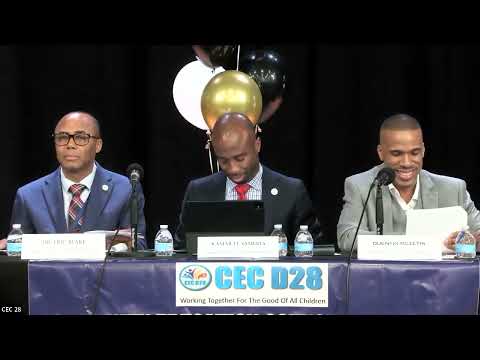
Families raised multiple special education concerns at the District 28 town hall, including inconsistent speech therapy scheduling, shortages of related‑service providers, delays accessing or repairing AAC devices, and insufficient one‑on‑one instructional support.
Chancellor Kumar Samuels said every child has a right to services outlined in their IEP and acknowledged gaps that remain even if the majority receive services. He cited a district figure that “over 92.5%” of students in District 28 are fully receiving mandated services and said the DOE will continue to strengthen service delivery.
District staff identified immediate steps: hiring six additional related‑service providers in District 28; piloting expanded period coverage so staff already in schools can provide extra sessions for pay; partnering with a local university program (referred to in the town hall as a U of T partnership) to expand occupational/related therapy sessions; and offering assistive‑technology (AT) evaluations on Saturdays at a local weekend academy site and at summer ESY locations.
On District 75 colocations, officials said colocating programs supports inclusion and reduces prejudice when students learn in the same buildings. DOE leaders also committed to prioritizing transition planning, internships and post‑secondary pathways for students with significant support needs as part of a broader “portrait of a graduate” effort.
Officials asked families to keep reporting service gaps so district staff can respond to individual cases; they committed to follow‑up and greater outreach on available evaluation and repair options for assistive devices.