Late‑file bill would let counties authorize sale of low‑dose THC beverages at liquor stores; industry split over impacts
Loading...
Summary
Senate Bill 1008 would let counties opt in to permit off‑premise sales of low‑dose THC beverages (up to 5 mg THC per serving) through licensed alcohol wholesalers and local liquor stores while preserving dispensary authority over higher‑dose products; supporters cite market growth and tax revenue, dispensaries and cannabis groups warned of enforcement, traceability and revenue diversion concerns.
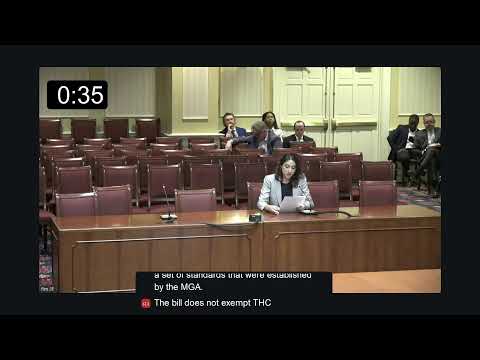
Senate Bill 1008, introduced as a late‑file bill by Sen. Steve Hershey on March 31, would authorize a narrow, regulated pathway to distribute low‑dose THC beverages (defined in the bill as products containing 5 milligrams of THC or less per serving) through class 1 beer, wine and liquor wholesalers to local off‑premise retailers if a county’s local liquor board adopts regulations allowing such sales.
Sponsor Hershey said the bill preserves Maryland Cannabis Administration product testing, labeling and packaging rules, maintains existing dispensary authority for higher‑dose cannabinoid beverages, and would tax retail sales at 12 percent. He and allied trade groups argued that expanding distribution through the state’s established alcohol wholesale and retail network could spur a nascent beverage category — currently a small share of dispensary sales — and create additional general‑fund revenue beginning in fiscal 2027.
Trade groups representing wholesalers and beer/wine/liquor retailers expressed support with caveats about regulatory detail, security and coordination between the Alcohol Tobacco Cannabis Commission (ATCC) and the Maryland Cannabis Administration (MCA). CanMED and alcohol wholesalers said the regulated packaged‑goods channel can provide traceability, recall capability and broad distribution capacity.
Opposition testimony came from the Maryland Dispensary Association, which warned that diverting a growing product category to thousands of alcohol retailers could undercut dispensaries and pose regulatory and enforcement challenges, including display, touching, vaulting and customer‑age enforcement. The MCA provided information‑only testimony noting the growth of the beverage category and warning that the bill creates overlapping regulatory frameworks and could shift revenue flows away from programs funded by existing cannabis revenue allocations. County representatives asked for a share of new sales tax revenue rather than routing all proceeds to the general fund.
Committee questions focused on consumer safety, display and access restrictions (to prevent inadvertent purchase by minors), local‑control decisions by liquor boards, and whether dispensaries could be given parity on display and storage rules. Industry witnesses said many operational details would be worked out with regulators if the committee advanced the concept. The hearing produced no vote and multiple stakeholders asked the legislature and regulators to resolve issues of enforcement, advertising and equitable revenue sharing.