Get Full Government Meeting Transcripts, Videos, & Alerts Forever!
Get email alerts on the Committee Governance topic
No spam. Unsubscribe anytime.
Sebastopol staff propose capped planning-hours option to shore up Climate Action Committee amid fiscal emergency
Summary
City Manager Don Schwartz and interim planning director Jane Riley presented options to reduce staff time supporting the Climate Action Committee — including ending Brown Act status, self-administering Brown Act duties, a capped monthly staff-hours budget, or fewer meetings — and staff said they will verify cost figures before sending recommendations to the City Council by early October.
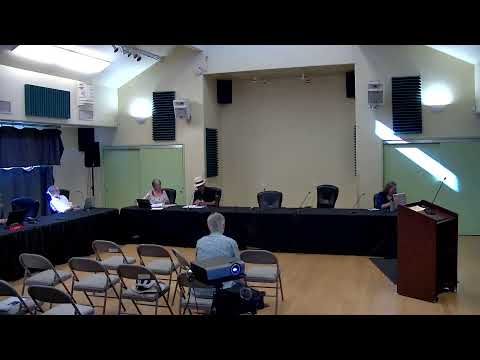
City Manager Don Schwartz and interim Community Development Director Jane Riley urged the Sebastopol Climate Action Committee on Thursday to weigh options that would reduce planning staff time devoted to the committee as part of a response to a declared fiscal emergency.
"I apologize that that conversations have not been done in that spirit," Don Schwartz said as he opened the presentation, framing the discussion around the city's constrained finances and a proposed sales-tax measure on the November ballot that staff called the "foundational piece" of addressing the shortfall.
Jane Riley, the interim planning and community development director, presented a menu of preliminary options staff has drafted to lower annual staff costs tied to committee work. Riley said last year's staff time allocated to CAC support totals about $50,000 measured at current billing rates, with an estimate that roughly half of that might be recoverable under certain changes. Options included: disbanding the CAC as a Brown Act body and reconstituting it as a director's advisory group (staff termed this "no Brown Act" and said it would yield the largest savings); having the CAC do its own Brown Act compliance (similar to how a school board operates); creating a capped staff-hours budget for the CAC (example: a 10-hour monthly allotment that rolls over), and reducing meeting length or frequency.
Riley stressed these ideas were "for discussion purposes only," had not been fully vetted legally and that some figures were preliminary. Committee members pressed staff for detail on how the calculations were done — particularly how Zoom and technical support costs were factored in and whether a line in the packet was a typo. "That very well could be," Riley said, agreeing to check her memo and provide corrected, itemized numbers.
Several members said they were uncomfortable with the wholesale elimination of Brown Act protections, arguing it could diminish the committee's influence and ability to engage across departments. Others favored a hybrid approach or the staff-hours budget as a compromise that would preserve public-meeting protections while constraining staff time.
"If we go with a budget, you can choose how you want to use that budget," Riley said, outlining that the committee could allocate hours to staff-heavy tasks such as recruitment or ordinance preparation and save hours when work is lighter.
Don Schwartz said staff heard a general preference for bringing a staff-hours-budget recommendation to the City Council and asked the committee to provide final input: staff aims to deliver a council report by mid-September or no later than Oct. 1. Committee members requested a short follow-up meeting to review the draft staff report before it goes to council.
Next steps: staff will audit and reissue the cost breakdown the committee flagged as inconsistent, produce a draft framework of recommended options for committee review, and schedule the staff report for council consideration in the September–October timeframe.