Twentynine Palms council denies 184-acre eGroup solar project after heated hearing
Loading...
Summary
After a multi-hour public hearing and more than an hour of council questions, the Twentynine Palms City Council voted to deny a proposed 184-acre utility-scale solar project by eGroup, citing concerns from residents about aesthetics, large-scale grading and dust risks; the denial preserves the city's moratorium and leaves the applicant able to pursue state review under AB 205.
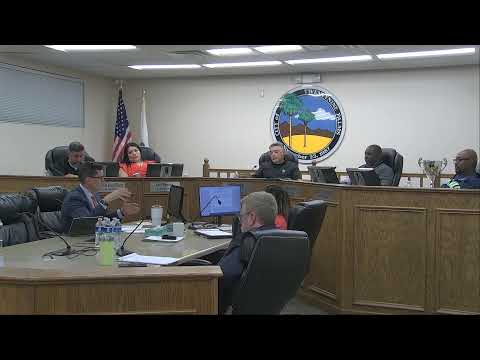
The Twentynine Palms City Council voted to deny a proposed 184-acre solar field from developer eGroup on March 10, after a lengthy public hearing that split residents and elected leaders.
Robert Smith, an attorney representing eGroup, told the council the company had prepared a 1,000‑page environmental record and negotiated a community benefits package it said would deliver roughly $5.45 million in dedicated payments over 30 years plus an estimated $8.3 million in lifetime economic value to the city under certain assumptions. "We are seeking your approval tonight," Smith said, urging the council to accept the staff‑recommended approvals and associated development agreement.
Opponents filled the council chamber and spoke in forceful terms about environmental and public‑health risks. "I urge you to vote no," said Mary Kay Sherry, a resident who described concerns about desert habitat and the project's visual impact. Other commenters cited the project's grading plan and warned that mass earthmoving would increase airborne dust and valley fever risk for nearby residents.
City staff and the applicant acknowledged one unavoidable EIR finding: the project would cause a significant, unavoidable aesthetic impact. Staff also outlined mitigation measures for air quality and construction dust — including watering, wind‑speed limits for work and dust suppression — and listed the applicant's commitments to coordinate with the California Department of Fish and Wildlife and other state agencies on biological mitigation.
Council members probed technical details during a long question-and-answer period. Members asked whether the developer could meet the 50‑megawatt threshold that can trigger California Energy Commission review, how grading would be staged, who would supply water for dust control, and whether the community‑benefit package would remain if the project shifted to state jurisdiction. The council also discussed whether denying the project would leave the city with less certainty over any future benefits because the applicant could seek CEC approval under AB 205.
After debate, Council member (speaker 6) moved to deny the project; the motion was seconded and passed by roll call. The clerk announced the result as "Denied 3 1 and 1 abstention." The motion means the city will not adopt the resolutions and ordinances on the staff agenda for this item; the developer retains the option to pursue state review.
What happens next: the city retains its moratorium on utility‑scale solar enactments; denial does not bar the applicant from filing an application with the California Energy Commission under AB 205. City staff told the council that state review could reopen public comment and that the CEC would determine any public benefits package if the project advanced at the state level.
The council adjourned the hearing and moved on to other business.