Lifetime Citizen Portal Access — AI Briefings, Alerts & Unlimited Follows
Alaska senator warns Save America Act would disenfranchise rural voters without implementation support
Loading...
Summary
A senator from Alaska told the Senate floor the Save America Act's substitute amendment would force in-person proof-of-citizenship and stricter photo‑ID and absentee rules that could be impractical and costly for many remote Alaskans without federal resources to implement.
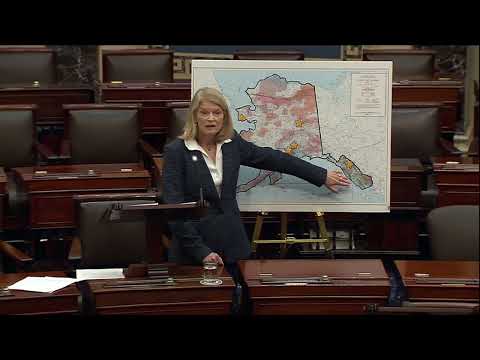
A senator from Alaska told the Senate floor that the Save America Act, in its current substitute amendment to the bill text referenced on the floor, would impose immediate and prescriptive federal requirements that risk disenfranchising many rural voters in her state.
The senator, speaking at length about Alaska's geography and communities, said the amendment would require in‑person presentation of documentary proof of citizenship to complete voter registration and would add a new, narrowly defined photo‑ID requirement with an expiration date. "This is gonna be hard. This is gonna be costly on Alaskans," she said, arguing the measures take effect "upon passage of the bill" and would arrive with no federal funding for mobile units, additional staff, or other implementation costs.
Why it matters: Alaska spans a large, sparsely served territory, the senator said, and many residents rely on mail, online processes or the state's permanent fund dividend application to register. She told colleagues that in 2024 more than 80% of applicants registered by mail, online or through the PFD application and that roughly 29,000 new voter registrations in 2024 meant about 25,000 Alaskans could be compelled to travel to one of the state's six Division of Elections offices to certify citizenship under the bill as drafted.
Details and examples: The senator walked senators through specific access barriers and costs in remote communities. She cited flights, overnight stays and transportation within cities as a combined burden that could exceed $1,000 for a quick trip to present documents in some parts of the state, and said obtaining certified birth certificates and passports can add months and fees (the transcript cites $30 for a certified birth certificate and $130 for a passport application; the senator noted processing delays of one to two months in Alaska's vital records office).
She also highlighted disaster and special‑circumstance problems: residents of communities hit by a recent storm reported losing essential documents and would face time and expense to recreate proofs of citizenship. On tribal ID cards, she noted many do not include expiration dates or photos and said the substitute amendment's strict specification of acceptable photo IDs could leave tribal members without qualifying identification.
The senator said the substitute amendment also significantly narrows absentee voting for federal elections, limiting mail ballots to narrow categories (members of the uniformed services abroad, illness, caregiving, verified travel and a few other narrow hardships) and prescribes distinct chain‑of‑custody rules for absentee ballots. She said Alaska's longstanding no‑excuse absentee voting and ballot tracking for tens of thousands of voters would be curtailed by the proposed default rule favoring in‑person voting.
Evidence and balance: The senator said Alaska's review over a 10‑year span flagged roughly 70 instances that were investigated for potential noncitizen voting (about seven per year), and questioned whether those numbers justify sweeping federal changes that would be costly to implement and disruptive to states' established processes. She emphasized support for the goals of preventing illegal voting and for reasonable voter ID, but said implementation details and federal preemption of state election administration were the central problems for Alaska.
Procedural note: After the senator yielded the floor, another senator reported a cloture motion was sent to the desk for a Senate amendment (number 4421). No vote on that motion is recorded in the provided transcript.
The senator concluded by saying she has filed more than a dozen germane amendments to address the practical problems she described and reiterated that "implementation matters" and states should be able to set rules matched to their realities.