Get Full Government Meeting Transcripts, Videos, & Alerts Forever!
Get email alerts on the Environment Water Quality topic
No spam. Unsubscribe anytime.
Canyon Lake leaders press for full EIR after water-quality expert flags risks at proposed Meadowbrook cemetery
Summary
Water-quality expert Darcy Burke told the City Council the proposed Crescent Garden natural-burial cemetery near Meadowbrook could pose significant risks to Canyon Lake’s drinking and recreational waters; the council voted to ask county planners for a full environmental impact report before the April 1 hearing.
Darcy Burke, introduced to the council as a water expert and vice chair of the Elsinore Valley Municipal Water District, told Canyon Lake officials the application for the proposed Crescent Garden Cemetery in the Meadowbrook area contains multiple, unresolved water-quality and public-health deficiencies. Burke said the developer’s mitigations are insufficient and recommended the county require a full environmental impact report (EIR).
Burke said the project — proposed as a natural or direct-burial cemetery about 1 mile northeast of Canyon Lake’s gates — initially relied on concrete liners and plastic bags to isolate remains. “There is no specification for that concrete liner, no plan for what happens if it fails in a seismic or flood event,” she said, warning that remains and contaminants could travel down the watershed into the lake. She added the applicant had not addressed Safe Drinking Water Act concerns, pathogen transport, nutrient loading, or the potential for septic failures and untested imported fill.
“Their documents are deficient,” Burke said. “They have not addressed source-water protection, pathogen transport, nutrient loading or corrective and monitoring plans.” Council members repeatedly asked whether monitoring wells or corrective-action plans were proposed; Burke replied none were included in the applicant’s submittal and said the water district’s initial review had identified similar deficiencies.
Public commenters and representatives of a newly formed group, Save Our Lakes Incorporated, urged the council to press the county for more study and to treat the reservoir as a protected source of drinking water and recreation. Terry Jarvis, a property-owners association leader, told the council the community “must stop” the project and cited federal and state source-water protections.
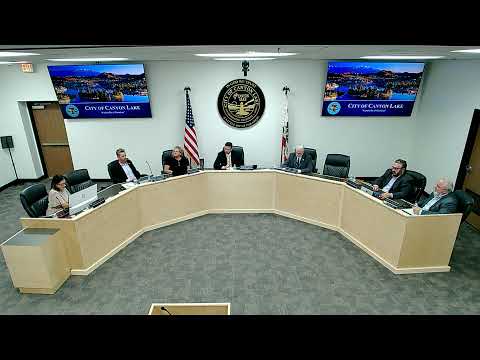
City staff and legal counsel recommended the council ask the county planning commission to require an EIR rather than accept the project’s mitigated negative declaration. The council voted unanimously to direct staff to prepare and send a letter requesting an EIR to the county planning commission in advance of the commission’s April 1 hearing.
What happens next: The county planning commission will consider the application on April 1; if it approves or deems the project complete the decision can be appealed to the Riverside County Board of Supervisors. City staff and independent experts said they will continue to review technical submittals and provide written comments to the county.
Authorities and references cited in the meeting included the Federal Safe Drinking Water Act and California Title 22, and council members and speakers discussed the potential involvement of the Santa Ana Regional Water Quality Control Board and Porter-Cologne Act authorities in further review.