Utah Inland Port Authority presents West Side baseline and preferred‑scenario studies focused on wetlands, transit and workforce
Loading...
Summary
UIPA and consultants briefed council on a two‑part study of the Northwest Quadrant that recommends protecting wetlands, investing tax‑differential funds in workforce training and transit gaps, and pursuing rail and landfill remediation while committing to ongoing West Side engagement.
The Salt Lake City Council received a briefing on March 24 about two companion studies the Utah Inland Port Authority commissioned to evaluate current development patterns in the Northwest Quadrant and a preferred‑scenario plan for future investments.
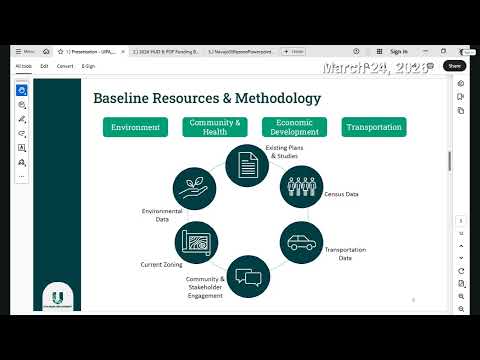
UIPA regional lead Steven Smith said the preferred scenario builds on a baseline review of existing plans, environmental data and community input to identify where tax‑differential revenue should be directed. The study focuses on investments with clear implementation pathways, such as partnering with the Department of Natural Resources on Great Salt Lake wetland conservation, funding public safety measures and supporting workforce training programs to connect West Side residents to higher‑wage jobs expected in the project area.
Nicole McDermott, the WSP consultant project manager, said the study covered the roughly 12,000 acres of UIPA jurisdiction within Salt Lake City and relied on an online survey (June–October 2025), technical workshops with health and transportation experts, and two community open houses. Key community priorities identified were wetland protection, air‑quality improvements, water‑quality work, addressing public‑health disparities in West Side neighborhoods, expanded transit options and workforce development.
Debbie Lyons, the city’s director of sustainability, described her role on the Northwest Quadrant review committee and emphasized repeated biweekly stakeholder engagement over the past year. She said the city connected consultants with county health officials, university partners and the city’s environmental‑justice resident committee.
Staff and consultants outlined immediate recommendations that can be tied to existing programs and partners: a portion of tax differential to support training programs, funding for on‑demand transit or vanpool pilots to close connections between West Side neighborhoods and the Northwest Quadrant, incentives for water‑efficient development and dark‑sky lighting, and policy actions aimed at truck parking and enforcement. Longer‑term items include rail crossing improvements and contingency funds for North Temple landfill remediation.
Council members pressed staff on how recommended transit improvements would be funded and whether the plan could push state or federal partners for more bus and rail capacity. UIPA staff said a separate, larger transportation study is underway with state partners and the Wasatch Front Regional Council; that study will address long‑term funding and system‑level needs. On water, councilors asked whether incentives were strong enough to stop outdoor irrigation; city staff said they will work with the public‑utilities director to explore regulatory tools and stronger incentive mechanisms.
Staff said the studies and supporting materials will be posted at inlandportauthority.utah.gov and committed to continued outreach to community councils and the Westside Coalition, and to annual implementation updates.