Get Full Government Meeting Transcripts, Videos, & Alerts Forever!
Get email alerts on the Public Safety topic
No spam. Unsubscribe anytime.
Police and fire budgets take center stage in Stockton’s FY24‑25 proposal
Summary
The proposed budget includes a $184 million police request, goals to reach 425 sworn officers, and plans to reopen Truck 7 and expand paramedic training in the fire department; chiefs emphasized recruitment, retention and community programs.
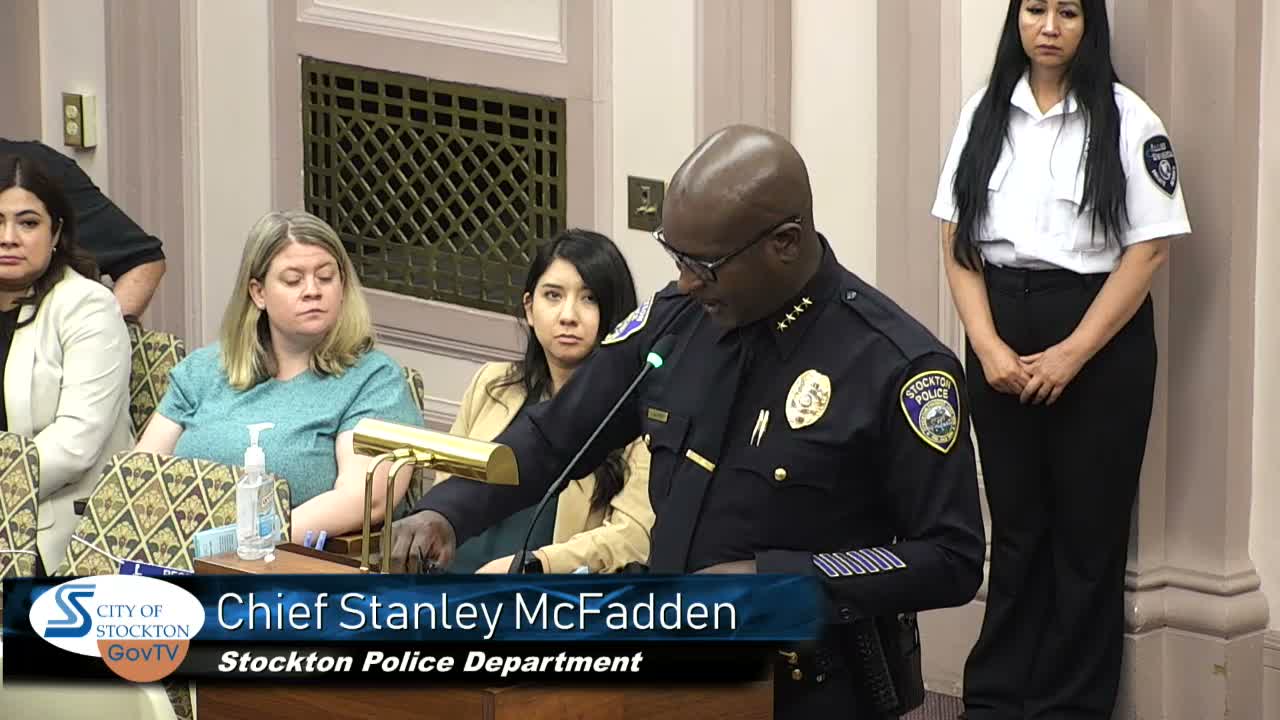
Chief Stanley McFadden and Fire Chief Rick Edwards used the council’s budget study session on June 5 to spotlight staffing and public‑safety initiatives embedded in the FY24‑25 proposal.
"We propose staffing of 425 sworn," Chief McFadden said, reporting the department has hired 44 new officers so far this year and is requesting six new positions in the proposed budget, including a dispatch supervisor and additional animal‑services staff. McFadden said the department’s FY24‑25 request is about $184 million, up from $168 million in the prior year; he described investments in recruiting, a dedicated IT position for police technology, community engagement staff and programs intended to improve solve rates and retention.
McFadden told the council the department currently counts 356 active sworn officers (including those in training and field training) and said 425 remains the long‑term authorized target.
Fire Chief Rick Edwards said the fire department will continue recruitment and training, plans to restore Truck Company 7 to service (targeted for mid‑July) and will send firefighters to paramedic school to address statewide paramedic shortages. Edwards said the fire budget projects roughly 259 positions for FY24‑25, a small net increase from the prior year, and a projected net annual activity deficit of about $702,000 that staff propose to cover from fund balances.
Both chiefs emphasized partnerships and grant funding. McFadden listed state and county grants (including Measure W sales‑tax revenues dedicated to sworn positions) and federal grants that support specialized programs; Edwards noted SAFER grant funding that supports 16 firefighter positions and grant applications for air‑monitoring equipment.
Council members asked operational questions including the size of academies and whether mental‑health response programs (such as a co‑response pilot) are factored into staffing and dispatch changes. The chiefs said partnerships and training to connect clinicians earlier in calls are part of ongoing operations.
The public‑safety spending proposals remain part of the broader proposed budget; council members will review the items again at the June 18 public hearing before any formal adoption.