Lifetime Citizen Portal Access — AI Briefings, Alerts & Unlimited Follows
Fairbanks North Star Borough board backs recommended budget that cuts class sizes, adds tutors and brings back elementary music
Loading...
Summary
The Fairbanks North Star Borough School District board unanimously passed a recommended budget that reduces pupil-to-teacher ratios, adds tutors and behavior specialists, and reinstates elementary instrumental music, even after a borough sweep removed $11.4 million from district reserves.
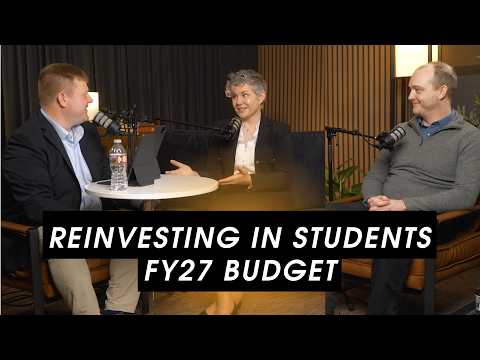
The Fairbanks North Star Borough School District on the Alaska Adventure podcast described a recommended budget the board passed that reduces class sizes, restores staffing and expands elementary programs while contending with an $11.4 million sweep of district reserves and other funding uncertainties.
"The best investment we were able to make this year was a reduction in pupil to teacher ratio," said Bobby Burgess, president of the district school board, describing a plan to meet state target PTR levels and to lower middle-school ratios further to increase elective and CTE options.
Superintendent Dr. Luke Minor and clerk and budget committee co‑chair Morgan Doolian said the budget adds direct support positions intended to improve classroom outcomes. Doolian said the board approved 10 elementary tutors and 10 elementary behavior specialists and reinstated elementary band and orchestra in neighborhood schools, starting as early as fourth and fifth grade.
"I had educators calling me, and one in particular called me, and she was crying, and she was crying tears of joy," Doolian said when recounting how staff reacted to the add‑backs. She said those staff additions will both help students who need intervention and make it easier for teachers to manage larger classrooms.
The board also approved other targeted investments: three new districtwide Extended Learning Program (ELP) positions intended to serve gifted students; additional FTE at Barnett Magnet School and Hutchinson High School; added secondary counselors; a teacher for the district CEC credit‑recovery program; a paid apprenticeship position; an onboarding specialist for newly certified or international teachers; a communications specialist; a health assistant; and a military student support coordinator. The administration and board also discussed expanding before‑school care at elementary schools next year.
Minor framed personnel as central to outcomes. "In my 21 years in education, I haven't seen a budget like this in the school district with as many investments and reinvestments back in our classrooms," he said, noting that much of the district's budget is personnel costs and that hiring depends on funding certainty.
Board members acknowledged the budget's gains come with fiscal fragility. Doolian described the procedural next steps: the board's recommended budget goes first to the borough assembly for review and then awaits a state funding decision. "Last year the state didn't actually have a number until we were one month into this year's budget," she said, adding that late state numbers hamper hiring and the district's ability to fill positions the board has restored.
The board also addressed a reserve sweep and unanticipated year‑end savings. Burgess said a borough ordinance and late federal impact aid produced a net positive fiscal year result that triggered a sweep; he described $11,400,000 removed from district funds and said part of the savings came from lower insurance claims in the district's risk fund and a roughly $22,000,000 vacancy‑driven savings reported at year end.
"We were making a lot of decisions based on knowing we had this amount in savings," Doolian said, adding that the swept funds increase the challenge of sustaining added positions if local or state revenue falls short. Board members said the borough ordinance narrows the district's allowable reserve range and forces either spending down or tighter risk‑averse budgeting, complicating medium‑term sustainability.
Despite the uncertainties, the board said it unanimously approved the recommended budget and framed the package as a cautious but positive reinvestment after previous cycles of deeper cuts. Dr. Minor noted that roughly $18,000,000 represents one month of district operating expenses, a reminder board members used to explain the sensitivity of reserve balances to unanticipated events.
The board and superintendent said they will now present the budget to the borough assembly and watch for the state funding decision, while continuing contract negotiations with education bargaining units and monitoring potential charter‑school changes that could affect enrollment and long‑term finances.
The podcast episode closed with board members reflecting on prior difficult budget years and expressing cautious optimism that the investments now approved will improve classroom supports while acknowledging the need to monitor sustainability.