Get Full Government Meeting Transcripts, Videos, & Alerts Forever!
Get email alerts on the Code Enforcement Ai topic
No spam. Unsubscribe anytime.
Stockton council approves camera‑based code‑enforcement pilot to target blight, with education first
Summary
The Stockton City Council voted 6–0 to launch a nine‑vehicle CityDetect camera pilot to identify code violations such as illegal dumping, graffiti and parking on lawns; officials said the program will prioritize education before citations and include a community 'grace' period.
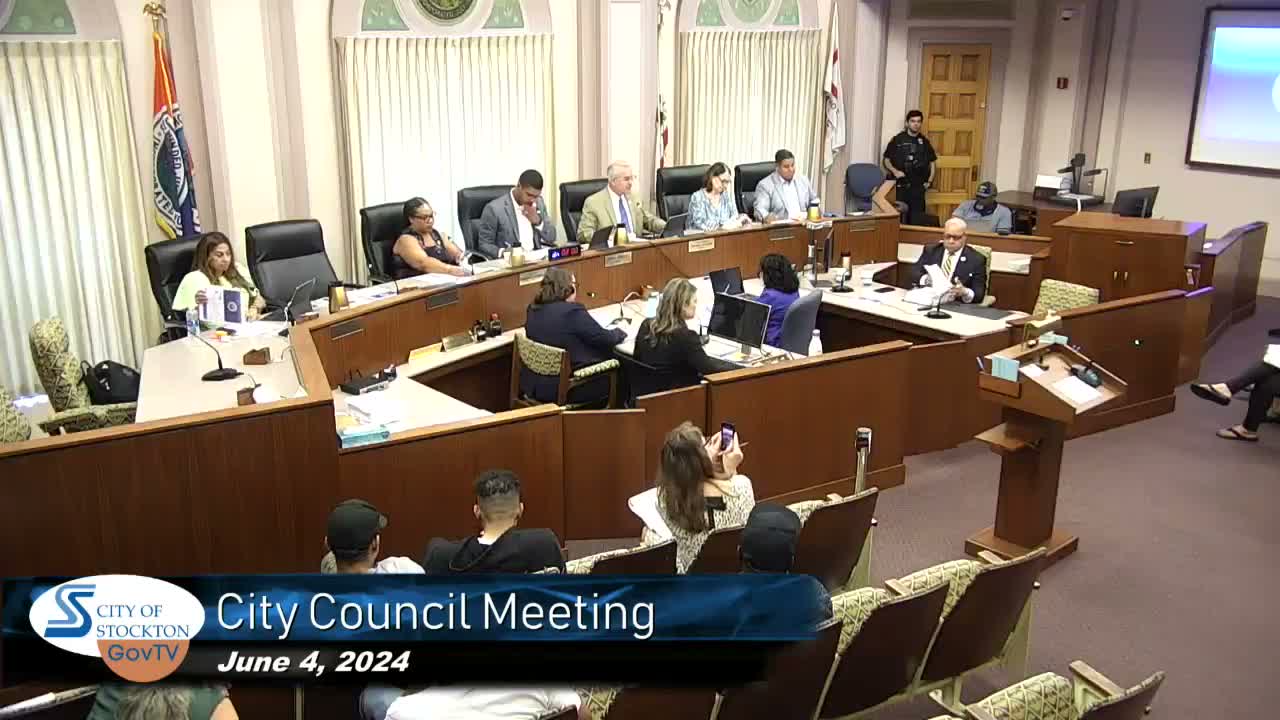
The Stockton City Council on June 4 approved a pilot program that mounts computer‑vision cameras on city vehicles to identify code violations and generate educational notices before any enforcement action.
Supporters said the CityDetect system will help an understaffed code‑enforcement operation locate recurring problems more efficiently. Almarosa Vargas, police services manager, told council the cameras were tested in a pilot and that the city will use the tools to “give an extra step in the process” — notifying residents with a photo and applicable municipal code before sending an officer.
Gavin Umbley of CityDetect described how the system uses computer vision to tag and score problems such as illegal dumping, graffiti and vehicles parked on lawns. “You’re able to really quickly detect all of those issues throughout space,” Umbley said, explaining the platform produces a historical record so staff can distinguish one‑offs from habitual violations.
Council members pressed staff on staffing and oversight. A council member noted the city has roughly 20 code officers and about seven to eight vacancies; Vargas said the cameras will be mounted on nine existing vehicles and that the software’s blight‑scoring will allow staff to prioritize cases rather than add to workloads. “The plan is once the violations are identified, the key is to educate,” Vargas said.
Vice Mayor Walmsley and others requested a public outreach plan and a grace period while residents get used to the new process; Vargas said the city communications office will lead notification and that staff expect a trial year of adjustments. The council recorded the motion and approved the item 6–0 (one member absent as noted in the record).
The pilot’s written materials presented to council describe an educational first step before enforcement and state that repeat violations would trigger the normal citation process. Council did not adopt additional privacy limits during the discussion; staff said the system is tuned to detect objects and conditions tied to codes rather than to create investigative surveillance records.
Next steps: staff will implement the nine‑vehicle pilot, coordinate outreach through the public‑information office, monitor vacancy and workload impacts, and return to council with program results and any recommended policy changes.