Get Full Government Meeting Transcripts, Videos, & Alerts Forever!
Get email alerts on the Public Safety topic
No spam. Unsubscribe anytime.
Stockton adopts AB 41 military‑equipment policy; police outline inventory and anticipated acquisitions
Summary
After a public hearing, the Stockton City Council adopted the Stockton Police Department’s updated military‑equipment policy under Assembly Bill 41; the department described current inventory (drones, armored vehicles, command vehicles, EOD robots) and said some future acquisitions would be sought with outside funding.
The Stockton City Council voted unanimously May 21 to adopt Stockton Police Department policy 706 under Assembly Bill 41, after a public hearing in which department leaders detailed current equipment, usage guidelines and contemplated acquisitions.
Lieutenant Ryan Terrell, the department’s training lieutenant and SWAT commander, reviewed AB 41 requirements and the department’s 2023 annual report. Terrell said the department’s inventory includes 12 unmanned aerial systems (drones), two EOD robots, two armored vehicles (one Lenco Bearcat with breaching capability), four command and control vehicles and a variety of less‑lethal munitions and breaching tools. He described most items as widely used law‑enforcement tools intended to preserve life and reduce harm, and he said some categories in AB 41 include items that are not strictly military in origin.
Terrell also described anticipated acquisitions that the department plans to pursue through federal or state programs or other outside funding: an AMRAP (armored rescue vehicle) and a long‑range acoustic device (LRAD) — both programs that could be available through federal disposal or grant programs — and additional command/rook vehicles. He said outside funding would be sought for purchase and the city’s ongoing cost would primarily be maintenance.
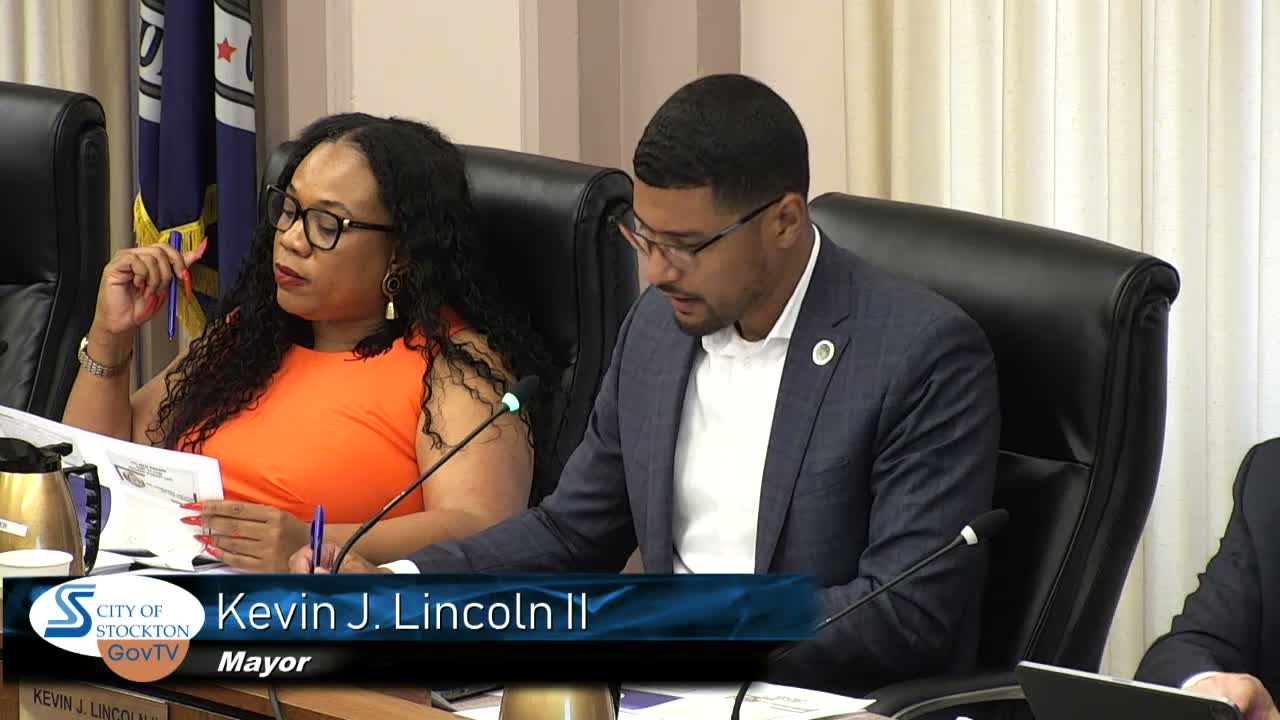
Councilmembers acknowledged community concerns about military equipment but emphasized the need for transparency and outreach. Vice Mayor Walmsley urged more public demonstrations and clearer explanations of how devices are used in de‑escalation and rescue scenarios; Terrell said the SWAT team already participates in several community engagement events per quarter to demonstrate select equipment and answer questions.
After the presentation and limited public comment (none registered for the item), the council adopted the ordinance and continuation of the policy by roll call vote 7–0.