Get Full Government Meeting Transcripts, Videos, & Alerts Forever!
Get email alerts on the Wastewater Rates topic
No spam. Unsubscribe anytime.
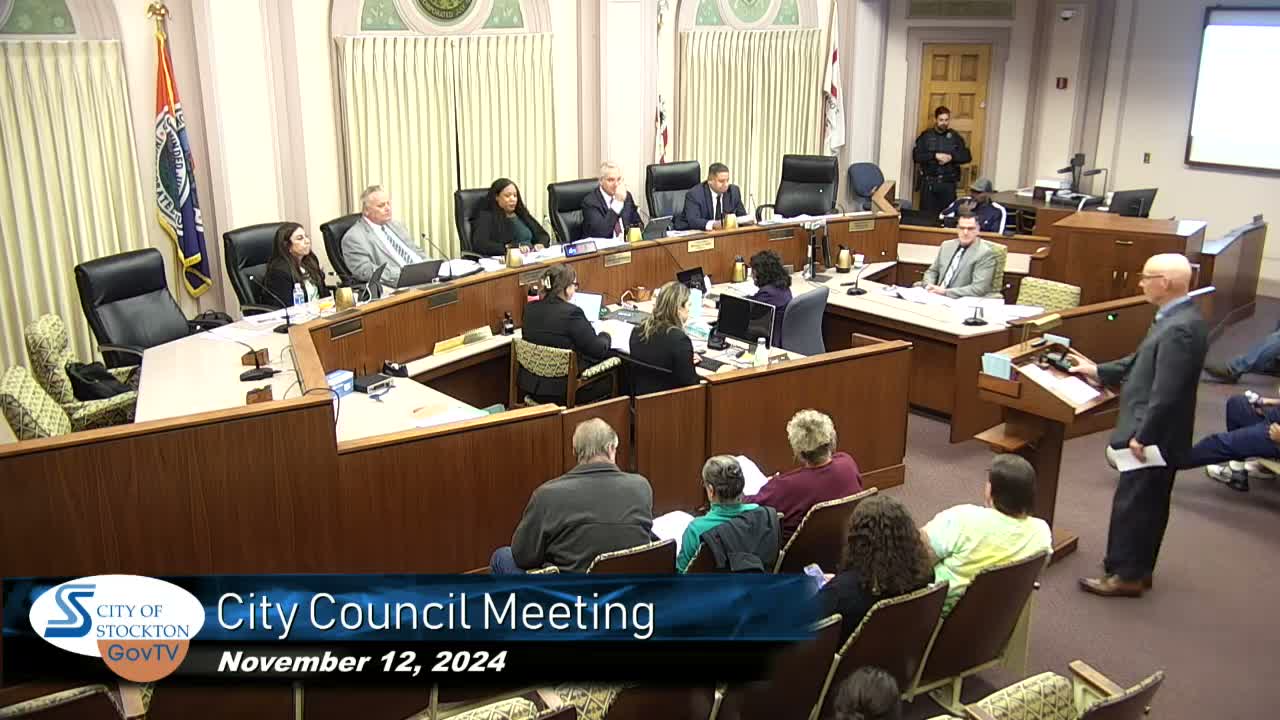
Stockton council approves wastewater rate increase after Prop. 218 hearing
Summary
Following a Prop. 218 public hearing, Stockton City Council approved a five‑year wastewater rate adjustment package that staff said averages about 4% per year; the measure passed 5‑1 with one dissenting councilmember.
Stockton City Council voted on Nov. 12 to approve a Proposition 218 wastewater rate adjustment after a public hearing and staff presentation of a cost‑of‑service study. The measure passed 5‑1, with Councilmember Villapadua recorded as the lone dissent.
Consultants and municipal utilities staff explained the rate study, which aligns projected revenues to operations, maintenance and a multiyear capital improvement plan. Staff said the plan relies largely on pay‑as‑you‑go funding and avoids issuing additional debt over the five‑year horizon. The study recommended a roughly 4% annual revenue increase on average; staff said the single‑family residential bill would increase incrementally, roughly adding $2.25 to $2.61 per month over the five‑year period and putting a typical single‑family residential monthly bill in the mid‑$50 range as compared with current levels.
Director Lytle and consulting staff described that Proposition 218 requires parcel‑owner notice and a protest procedure; the city mailed notices to property owners and the clerk reported receipt of 50 written protests but that those did not constitute a majority protest under Prop. 218. Several speakers during the public comment period urged caution about increases and asked the department to prioritize fixes for aging sewer lines, odor complaints and localized system problems.
Several members noted the city’s unique agreement to transfer treated water with the Delta and the need to maintain high treatment standards, citing recent state regulatory changes as a reason to invest in infrastructure. Staff also described grant and loan savings the city secured (including a WIFIA loan and low‑interest state SRF financing and a $10 million grant) that reduce rate pressure over the long term.
After the clerk confirmed the written protests did not constitute a majority, council took a roll call and approved the rate adoption motion 5‑1 (Villapadua dissenting). Staff will return with final ordinance language and implementation steps to notify customers and begin billing on the adopted schedule.