Stockton council approves $3.15 million Flock drone contract despite privacy objections
Loading...
Summary
After hours of public comment and council questioning, Stockton City Council voted 7–0 to adopt an amendment to its Flock Group contract to add a Flock drone first‑responder system at a cost of $3,150,000. Supporters said it speeds response; opponents warned of privacy, ICE access and long-term costs.
Stockton City Council voted unanimously March 31 to adopt Standard Agreement Amendment No. 4 with Flock Group Inc., authorizing $3,150,000 to add a Flock drone first‑responder system to the city's public safety toolkit.
The council's approval followed more than an hour of public comment in which residents and advocates pressed the council to reject the contract, citing civil‑liberties and immigrant‑safety concerns. "The $3,150,000 being proposed in this amendment is an exorbitant amount of money," said Sarah Connor, a community member who opposed the contract and urged tighter regulation of camera and drone systems. "These tools jeopardize our civil liberties and often put immigrant community members at risk." (Sarah Connor, community commenter.)
Police and Flock representatives told the council the drone system would be reactive — launching in response to calls — and would improve response times. "We're looking at realistic response times from 30 seconds up to about 4 minutes," said a Flock‑affiliated representative describing the proposed automated launch tied to the CAD dispatch system. Deputy Chief Kyle Pierce said video recordings would be owned by the Stockton Police Department and retained 30 days unless uploaded to the department's evidence system for longer storage.
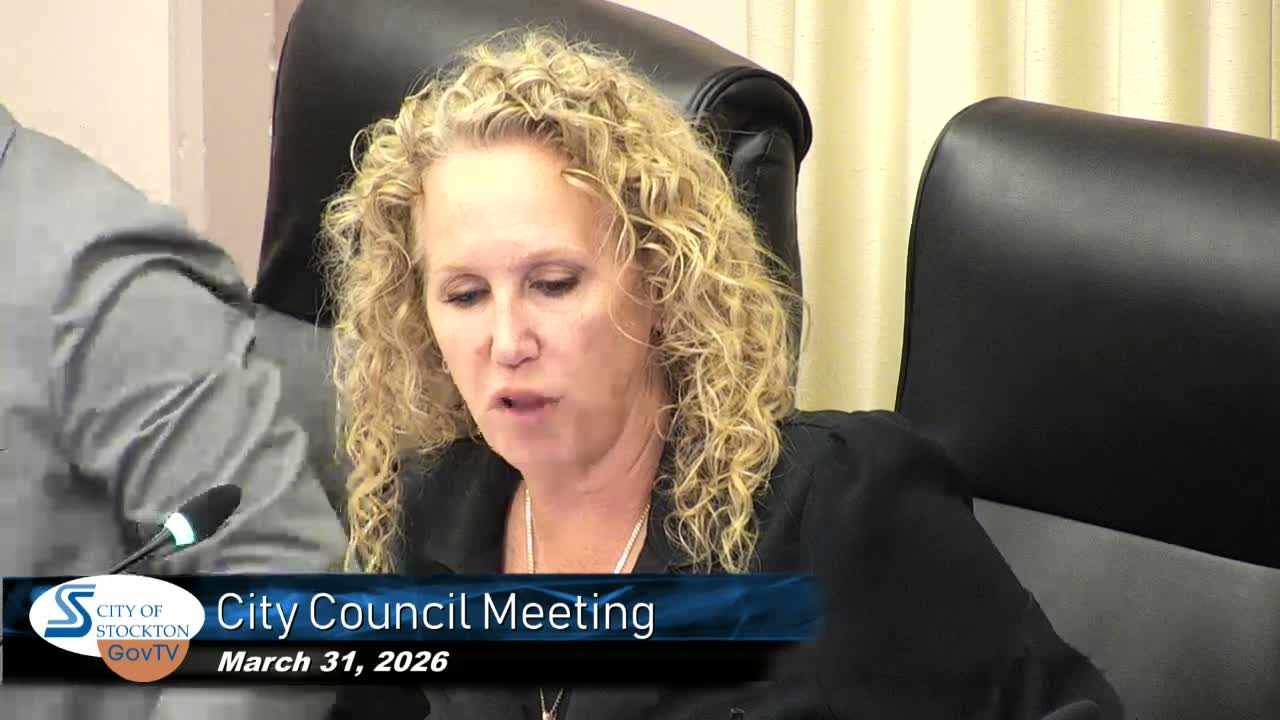
Council members pressed staff and the vendor on data sharing, oversight and metrics. Vice Mayor Lee said he heard the public's concerns and asked for contractual and procedural safeguards. "We heard you loud and clear," he said during the deliberations. Flock's public affairs manager, Lily Ho, said the company has implemented digital guardrails for California customers and that, since March 2025, the system blocks cross‑state sharing of law‑enforcement data. "We maintain that the data is yours and you choose who you share with," she said.
Opponents pointed to examples nationwide where law‑enforcement access to camera networks has been misused and to reports that Flock systems have been accessed in other jurisdictions. Several public speakers urged the council to invest instead in community programs such as youth prevention rather than expand surveillance technology.
Council members asked about costs beyond the initial grant year and learned the first year is covered by grant funding but years two through five will require additional grant or budgetary support; the contract includes cancellation language if funding is not identified. After the final discussion and vendor assurances about data ownership and state guardrails, the council voted to approve the amendment, with the motion carrying 7–0.
The council directed staff to clarify data‑access protocols, retention policies and public‑records implications and to report back as the program is implemented.