Get Full Government Meeting Transcripts, Videos, & Alerts Forever!
Get email alerts on the Governance topic
No spam. Unsubscribe anytime.
Workshop surfaces trust and communication issues; facilitators urge 'no‑surprises' and clearer roles
Summary
A long governance discussion at Stockton's priority‑setting workshop focused on strained relations, social media and the council’s internal norms; facilitators proposed basic governance commitments — respect for roles, limiting surprises and courteous interactions — and staff and the city manager committed to follow‑up.
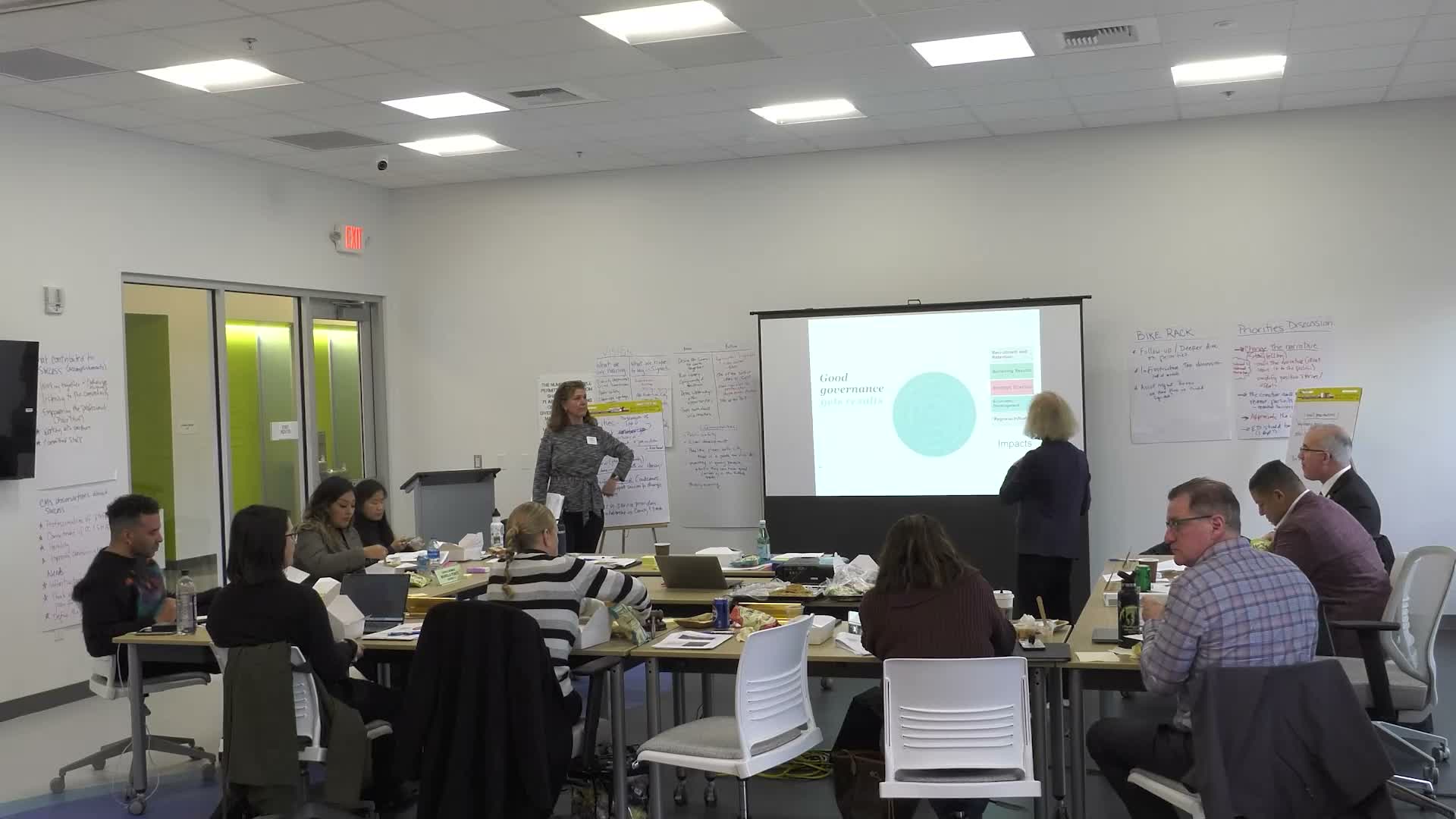
Facilitators used the second half of Stockton’s priority‑setting workshop to present basic governance fundamentals and to surface a long council conversation about trust, communication and how council members interact with staff and the public.
The facilitators proposed four fundamentals for improved collaboration: respect the policy role of the council and the operational role of staff working through the city manager; practice a ‘‘no‑surprises’’ approach to brief colleagues and staff on matters that affect them; treat each other’s staff and the public with courtesy; and seek compromises that build consensus. They framed these as practical steps to enable the council to implement its agreed priorities.
The proposal sparked an extended, candid exchange among councilmembers about social media, public statements and prior investigation‑related tensions. Mayor Figasi and several councilmembers described how off‑dais communications and public accusations eroded trust and complicated governance; in response, others apologized on the record for past conduct and said they were willing to try new norms.
Vice Mayor Lee criticized the use of public channels to escalate disputes and defended individual councilmembers’ right to speak for themselves outside formal council communications. In a section of the discussion about press releases and media, a councilmember observed that the mayor has extra communication responsibilities but said, “The charter does not give the mayor the sole responsibility of speaking for all of us all the time.”
Facilitators and staff encouraged practical, implementable steps: pre‑meeting briefings routed through the city manager, mindful timing of council comments to avoid late‑night agendas, and use of the workshop’s “bike rack” to capture follow‑ups so they are not lost. Staff and the city manager agreed to prepare a written report from the session and to design follow‑up work that could include a future full‑council governance session and additional facilitated conversations.
Why it matters: strained relations and unpredictable communications reduce staff effectiveness, can harm recruitment and retention, and affect how outside investors and partners view the city. Councilmembers repeatedly tied governance to the council’s ability to achieve the policy priorities discussed earlier in the day.
Next steps: facilitators will compile the comments and proposed norms into a short report; staff will include the governance items as bike‑rack follow‑ups and suggested procedural adjustments in a future briefing to the full council.