Get Full Government Meeting Transcripts, Videos, & Alerts Forever!
Get email alerts on the Homelessness topic
No spam. Unsubscribe anytime.
Council reviews Phoenix 'safe outdoor space' model as option for transitional housing
Summary
Councilwoman Padilla presented findings from a trip to Phoenix, describing noncongregant tent and container models with case management, hygiene services, storage and short stays (70–120 days) as a possible transitional option for Stockton’s unhoused families; council asked staff to pursue feasibility and funding options.
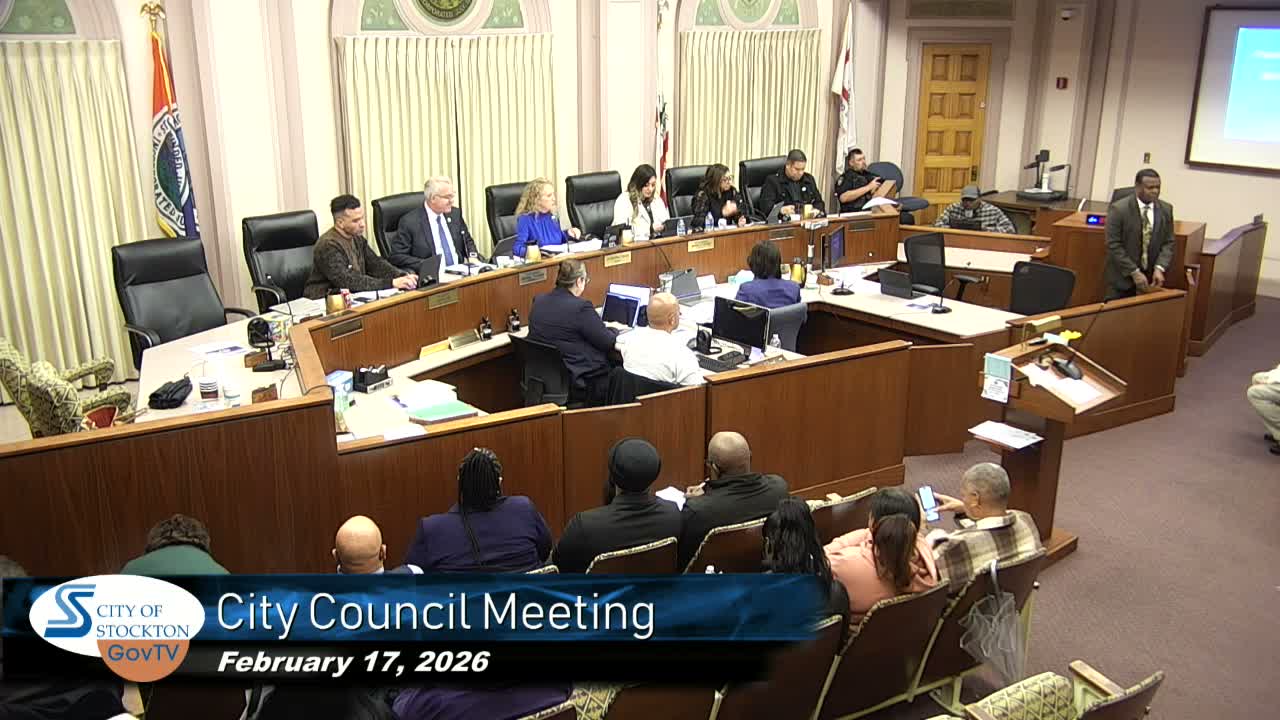
Councilwoman Michelle Padilla presented an informational briefing on Feb. 17 about safe outdoor space models the ad hoc homeless committee studied during a recent visit to Phoenix. Padilla described two primary approaches: tent‑based noncongregate sites with limited shared services and container‑based units with case management and navigation centers.
Padilla said the Phoenix sites emphasize referral‑based admissions, coordinated case management, security screening, storage for belongings, showers and laundry services, and on‑site navigation to permanent housing. “This is not permanent; their typical stays are 70 to 120 days with strong emphasis on case management and partner referrals,” Padilla said. She said the model had served more than 2,100 people since opening and relied on nonprofit operators.
Council members sought details about site selection, costs, operations, liability and the mix of families and singles who could be served. City staff and the city manager said the city owns some surplus parcels that could be considered and that operators and partner funding remain to be arranged. City manager Ford said Phoenix’s program limited walk‑up traffic and that strong operations reduced exterior impacts.
Public commenters largely supported piloting a transitional program but urged careful community engagement, clear funding commitments, and attention to family‑centered beds and medical support. Council did not take action but directed Padilla’s ad hoc group and staff to continue developing site options and funding pathways.