Get Full Government Meeting Transcripts, Videos, & Alerts Forever!
Get email alerts on the Energy Policy topic
No spam. Unsubscribe anytime.
Lompoc council votes to seek state waiver of 2025 solar-plus-storage mandate and to explore in‑lieu fee
Summary
The Lompoc City Council unanimously directed staff to petition the California Energy Commission for a waiver exempting new construction from the 2025 solar-plus-storage mandate and to return with an in‑lieu fee proposal and resolution for April consideration.
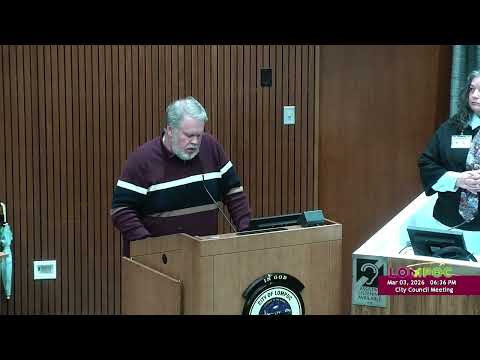
Lompoc’s City Council voted unanimously on March 3 to ask staff to pursue a waiver from the California Energy Commission for the 2025 state requirement that new single‑family homes include solar panels and battery storage, and to study an in‑lieu fee that builders could pay instead.
The action follows a presentation by Michael Lowe, the city’s new chief building official, who told the council the state’s cost‑effectiveness model assumes homeowners receive the full retail value for on‑site generation but that Lompoc’s customer‑owned generation rate reduces that benefit. “A Lompoc resident only realizes a net savings of roughly 7¢ per kilowatt hour,” Lowe said, arguing that shortfall means the statewide conclusions “do not hold true for our city.”
Why it matters: Lowe’s analysis said a typical solar-plus‑battery system with a roughly $25,000 upfront cost would yield lifetime energy benefits far below the estimated capital cost for many Lompoc buyers, and that 2,000 new homes required by the general plan could create community‑wide affordability and utility‑solvency impacts. Lowe presented a sample in‑lieu fee framework that converts the utility’s avoided wholesale cost into a net present value and used that to illustrate a defensible fee. He said a conservative fee example would be about $950 per kilowatt (roughly $2,800 for a typical system) rather than the full calculated value.
Council reaction: Members pressed staff on precedent, code timelines and whether local electrification and future demand might change the economics. Stephen Valle, the city’s electric regulatory compliance coordinator, said localized renewables and the utility’s renewable portfolio are additional factors to weigh. Public commenters offered mixed views: some said the mandate is costly and unfair to local ratepayers, while others urged investment in local renewable projects or grants that would spread benefits across the community.
The vote and next steps: Councilmember Vega moved to direct staff to file a petition with the California Energy Commission seeking exemption for new construction and to prepare a draft petition and resolution for the April meeting; the motion also requested staff develop a detailed in‑lieu fee proposal (with suggested use of proceeds for capital improvements such as street lighting). The motion was seconded and passed 5–0. Staff said it will return with proposed language and an implementation plan for council review in April.