Get Full Government Meeting Transcripts, Videos, & Alerts Forever!
Get email alerts on the Neighborhood Preparedness topic
No spam. Unsubscribe anytime.
Ready Fairfax presenter outlines five-step neighborhood preparedness guide
Summary
A Ready Fairfax presenter led an April webinar detailing a five-step neighborhood preparedness guide — define your area, recruit leaders, scout hazards, build a team and plan — and urged neighbors to use Fairfax County mapping tools and prepare for hurricane season beginning June 1.
A Ready Fairfax presenter walked attendees through a five-step neighborhood preparedness plan during an April webinar, urging neighbors to organize locally, map hazards and rehearse communication and evacuation procedures.
The presenter framed the guidance under this year’s theme: “our theme for this year is stronger together, building resilient communities,” and described Ready Fairfax as the county’s preparedness program that offers expanded in-person workshops. The webinar covered the English version of a five-step neighborhood guide that Ready Fairfax makes available in multiple languages online.
The guidance grew from recent local incidents the presenter used as examples. “We had an incident in Centerville where we had a gas leak and a house fire, And there were several people, within the neighborhood that were evacuated for 13 days,” the presenter said, stressing that neighbor-to-neighbor coordination helped track who was displaced, where they were going and what their needs were. The presenter also recalled a nighttime evacuation in Quail Pond that complicated communications and sheltering.
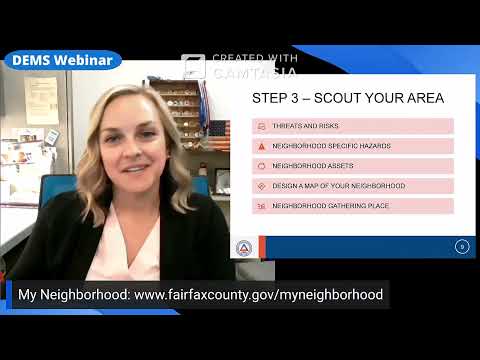
The five steps the presenter emphasized are: define a manageable, walkable area tailored to housing type; recruit a small set of leaders (avoiding both too many leaders and a single point of failure); scout local hazards and neighborhood assets (for example flooding, severe storms, proximity to pipelines, and nearby community centers or libraries); build a directory with contact details and information on residents’ access and functional needs; and write and test a plan with regular drills and communication checks.
Practical tips included identifying a nearby gathering or evacuation location, setting up group-messaging apps for fast notifications, conducting monthly information checks and using simple door tags to indicate whether households are OK or need help if phone service fails. The presenter recommended an emergency “grab-and-go” kit with overnight and one-day clothing, medication and important documents.
The presenter pointed to Ready Fairfax templates and a neighborhood survey available online to help neighborhoods build plans and directories, and recommended Fairfax County’s “my neighborhood” mapping tool to locate public-safety assets such as community centers and libraries.
Looking ahead, the presenter said the May session will cover hurricane preparedness and flood maps, noting that “hurricane season starts June 1.” The webinar closed with an invitation to request a Ready Fairfax workshop for neighborhood groups and a reminder to test plans and communications regularly.
The webinar did not include a formal vote or policy action; it was an informational presentation offering resources and next-step options for neighborhood groups.