Union presses Milwaukee Public Schools for full CPI as district cites $46 million shortfall
Loading...
Summary
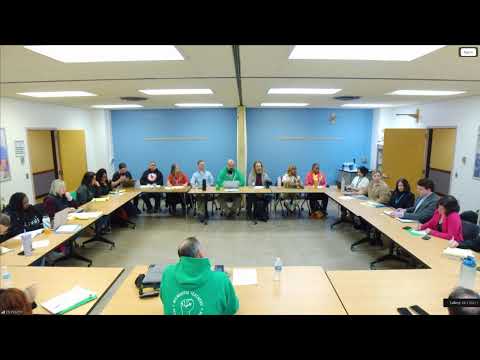
During a bargaining session, union representatives for MTEA disputed district claims it cannot afford a full cost-of-living increase, called for line-by-line financial backup and a written plan for a proposed $25 million class-size reduction; the district said it will provide detailed costing spreadsheets and pivot tables and asked for a counterproposal within a 2.63% CPI ceiling.
A union representative for the Milwaukee Teachers' Education Association (MTEA) challenged Milwaukee Public Schools' assertion that it cannot afford a full cost-of-living adjustment (CPI) for represented workers, saying the district has room in its budget and asking for detailed financial backup during a bargaining session.
The union speaker said the district has "been spending funds freely," pointed to about 26 recent wage reclassifications and "hundreds of millions in contracts," and asked administrators to show how savings could be found without cutting frontline workers. "If an organization of this size can't resolve a 2% overspend, there are bigger problems here," the union representative said, citing a $46,000,000 structural deficit the parties have been discussing.
District staff acknowledged the $46 million structural deficit and said the current bargaining focus is limited by a 2.63% CPI ceiling; they asked MTEA to propose an alternative structure, timing or split within that ceiling. The district also told the union it had received additional information requests submitted the prior evening and would provide written responses after the session rather than rushing incomplete verbal answers.
Both sides discussed numbers in the costing packet the district distributed. The district said the cost-of-living (COLA) figures were highlighted in the packet and that the step calculations in the model assume full steps on July 1, 2026, subject to board action. The district committed to share the underlying math and pivot tables behind the spreadsheet so the union could compare calculations side by side.
The union pressed for several specific documents and clarifications: a written plan showing how the superintendent's proposed $25,000,000 for class-size reduction would be implemented on paper, a line-by-line school budget for that plan, and details of contracts the district cited as possible savings targets. The union also asked for documentation of savings realized from past contract renegotiations and for the list of contracts and amounts the district is using in its modeling.
On staffing data, district staff said they had reviewed several years and expect retirements in the next year to be in the roughly 200to300 range ("approximately 250" as characterized in the session). The parties clarified that a 5% to 10% range referenced in the materials referred to resignations/turnover projections, not retirements.
The union raised programmatic impacts it said were already occurring: a district email referenced 263 positions cut (later described as 201 affected employees when accounting for vacancies/retirements), and the union cited examples including a high-school music teacher whose position was cut from five days to one day per week. The union suggested referendum funds exist that could be used to restore art, music and physical education hours.
No formal votes or motions were recorded in the session. Both sides agreed to caucus during the meeting; the district said it would provide additional financial detail on a rolling basis (including pivot tables and calculations), and the parties discussed scheduling further bargaining sessions.
The district and union continue to disagree on whether full CPI on July 1 is affordable without deeper cuts or substitutions; the district repeated its request that the union present a counterproposal that fits the 2.63% ceiling, and the union repeated that it needs full financial documentation to evaluate any alternative. The district said it will supply the requested documentation and additional financials to support continued bargaining.