Milwaukee County outlines equity-driven 'Future State' plan, seeks public feedback
Loading...
Summary
Milwaukee County officials presented draft recommendations to clarify county services and address health and housing disparities, proposing a chief health strategist, a 'no wrong door' service model, and options that would require state approval, including a regional transit authority.
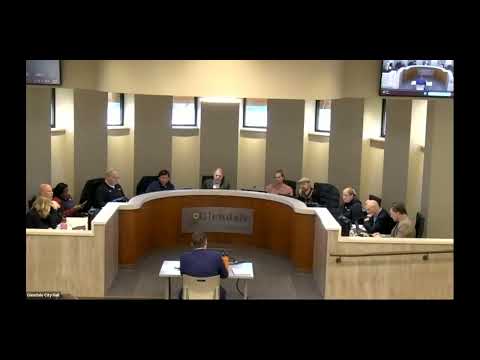
Isaac Rowlett, strategy director at Milwaukee County, told the Glendale Common Council that the county’s Future State Project is seeking public feedback on draft recommendations aimed at reorganizing how county services are delivered.
Rowlett said the county has engaged roughly 2,000 residents so far and framed the central problem: many residents do not understand what services the county provides. “When we started asking people about what they wanted from Milwaukee County, what we kept hearing was, what does the county do again? It’s confusing,” he said.
The draft recommendations Rowlett presented include: a unified, equity-driven public-health model led by a chief health strategist and an office of equity to coordinate data and shared services across municipalities; a “no wrong door” approach to make county services easier to access and better coordinated across departments; integrated case management and possible expansion of constituent-relationship-management systems; mobile service delivery, community hubs and navigators; and renewed funding for the county’s Birth-to-3 program, which Rowlett said has lost roughly 75% of providers as federal funding declined.
Rowlett also outlined proposals that would require state enabling legislation: a regional transit authority to provide dedicated transit funding and governance and a special-purpose parks district to stabilize funding for the county’s park system and zoo. He characterized those two proposals as structural changes that would create new governance units with designated taxing authority and said state action would be required for either model to proceed.
When asked by council members how the proposals would be paid for, Rowlett said the recommendations are intended as multiyear or multidecade goals. Some items, such as those requiring new taxing authority, would need state enabling legislation; others would depend on efficiencies, shared services, or re-prioritization of county spending. Rowlett also told the council the county plans to tear down and rebuild its Safety Building in 2028.
Why it matters: Rowlett said the project aims to reduce disparities in population health across Milwaukee County and to make county services more navigable for residents. The county will collect additional feedback through a public survey and revise the draft recommendations for presentation to the Milwaukee County Board in June.
Next steps: Rowlett asked attendees to complete a survey (a QR code and paper copies were offered) and said the project team will finalize recommendations in mid-to-late April and present them to the County Board in May and June for review and potential adoption.