Get Full Government Meeting Transcripts, Videos, & Alerts Forever!
Get email alerts on the Affordable Housing topic
No spam. Unsubscribe anytime.
Titusville panel adopts ordinance to align local rules with Florida's Live Local Act
Summary
The Titusville Planning and Zoning Commission voted 5-0 to approve an ordinance amending the city's land-development regulations to conform to the state's Live Local Act, including a 40% affordable-rental set-aside and changes to open-space and height rules.
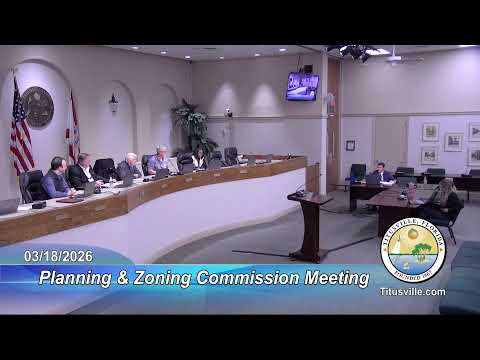
The Titusville Planning and Zoning Commission on March 18 approved an ordinance to update the city's land-development regulations so they conform with Florida's Live Local Act. The commission voted 5-0 to adopt the draft ordinance after a presentation and brief questioning from members.
Christy Anderson, the city's senior planner, told the commission the Live Local Act requires local governments to allow specified multifamily developments where at least 40% of the units are set aside as affordable rentals for 30 years. Anderson summarized changes made by Senate Bill 1730 and described edits to the city's Chapter 29 (special districts and overlays) to match state requirements, noting staff's recommendation for approval.
Commissioners asked how the new state law would operate before the city amends its code; staff said the city would continue to apply its ordinances where they do not conflict with the state law and that state provisions supersede local code when conflicts occur. Commissioners also pressed staff on which Titusville zoning districts map to the state's references (including "commercial working waterfront industrial") and on how the state's height allowances would interact with nearby single-family areas. Anderson said the amendment narrows where greater heights can apply and includes provisions aimed at protecting single-family neighborhoods if the conditions on page 31 of the packet are met.
The ordinance also reduces the open-space minimum from 25% to 10% as described in the state law; staff clarified that minimum landscape-buffer standards remain in effect and may count toward the open-space requirement. Anderson noted the law requires at least 50% of open space be pervious and dedicated to active or passive recreation. She told the commission the city has not yet applied the new language to an active project and would look to refine administration practices as projects arise.
Member Linwood Reis moved to approve the ordinance as presented; Member Scully seconded. The roll-call vote recorded five yes votes and no opposition, and the motion passed.
Next steps: the ordinance will proceed per the city's adoption process and staff expects additional amendments may be necessary after the city applies the new rules to development proposals.