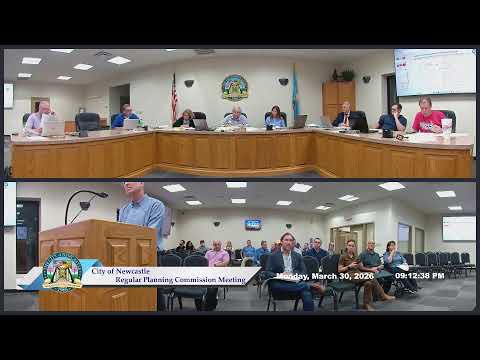
Neighbors urge tighter buffering and lower density as council considers Riverview PUD changes
Loading...
Summary
Residents at a lengthy public-comment period pressed the council to reduce density, expand buffers and address drainage and parking concerns after developers amended the 77-acre Riverview PUD; staff recommended approval contingent on additional traffic and drainage studies.
A crowd of Newcastle residents told the City Council they fear a revised plan for the Riverview planned-unit development will bring denser housing, more traffic and drainage problems to adjacent neighborhoods.
At a public hearing, several residents said the developer’s new plan — a revised PUD covering about 77.33 acres just north of Highway 37 — increases density by shrinking lot sizes and concentrating multifamily units near existing single-family neighborhoods. "What they proposed isn't even close to this phase," said Brady Smith, a long-time resident, who said the development deviates from promises made when neighbors bought homes. "He would roll over in his grave if he knew what was going on," Smith said, referring to an earlier developer's vision for the site.
Staff and the development team described changes they say respond to earlier concerns: roadway widths were increased from 20 to 24 feet; sidewalks were added along Riverfront Drive; the site plan now shows a mix of village single-family lots, nine multifamily blocks, and a village-center commercial frontage. Staff said the PUD adds architectural-review protections and specifies minimum parking, masonry percentages and setback rules. "We went back to the drawing board to try to accommodate some of those concerns," a staff presenter said.
Residents pressed specifics. Brianna Rose said lot sizes fell from the original plan and that many newly proposed lots are 5,000 square feet or smaller, leaving homeowners uncertain about whether 3-story, 55-foot houses could be built abutting existing yards. "When they say this is under the density of a neighborhood because it's under 4, that's a really misleading calculation," Rose said, asking councilors to account for the impact of multifamily units that may be concentrated on a small portion of the site.
Others raised infrastructure concerns. Multiple speakers described existing drainage problems and said they fear additional runoff from dense construction. "All that water has to go somewhere, and it's gonna cause a lot of drainage issues," said one homeowner. Residents asked for wider evergreen buffers, restrictions on rear-facing windows, and guarantees that the proposed 20-foot landscape buffers will be sufficient.
Staff responded that density calculations include the entire property — including open space and common areas — and explained why variances are typical for PUDs. Staff also noted that detailed traffic and drainage analyses, including a traffic-impact analysis and hydraulic studies, will be required at the first final-plat stage. The team said the developer will present renderings to the council and that the architecture-review board must approve site plans before building permits are issued.
The council did not take a final vote on the PUD at this meeting. Staff recommended approval of the revised PUD subject to the outstanding technical studies and the continuing ARB review; residents urged the council to require stronger buffers, clearer HOA commitments and firmer limits on building heights and unit counts before granting final entitlements.
The council accepted the staff presentation and indicated follow-up materials and analyses will be provided before any final action.