Get Full Government Meeting Transcripts, Videos, & Alerts Forever!
Get email alerts on the Land Use And Conservation topic
No spam. Unsubscribe anytime.
Henderson planner briefs commission on 15,000‑acre East Henderson Desert Edge study
Summary
Calvin, a City of Henderson long‑range planner, presented the East Henderson Desert Edge Study outlining six recommendations to protect roughly 15,000 acres of desert‑edge habitat, identify priority species and manage invasive plants; commissioners heard the presentation and took no action.
Calvin, a long‑range planner with the City of Henderson, presented the East Henderson Desert Edge Study to the planning commission, describing a roughly 15,000‑acre study area and a vision "to preserve the desert edge landscapes that sustain the Mojave Desert ecosystem values while providing compatible benefits." The study, prepared primarily in‑house with technical assistance from the National Park Service, mapped conservation values, disturbance categories and ownership across four subareas running from El Dorado Valley north through Railroad Pass and the River Mountains edge to the Old Landfill/3 Kids Mine area.
The study lists three focal species — the Mojave Desert tortoise, the Las Vegas bear poppy and the desert bighorn sheep — and documents 12 additional species of ecological importance. Calvin summarized field methods (city staff and volunteer surveys, an in‑house app for geolocated observations) and a disturbances heat map that highlighted infrastructure, recreation and illegal dumping as common stressors.
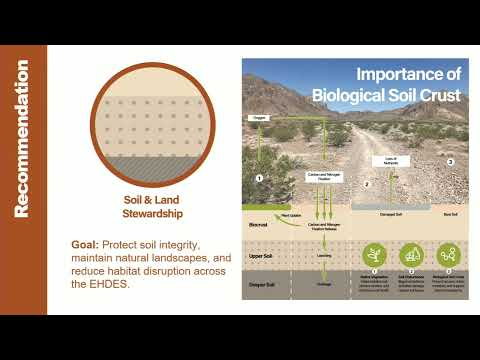
The plan offers six recommendation categories: establish an urban buffer zone to guide development and protect scenic vistas; prioritize biodiversity and habitat conservation; implement invasive‑species management (noting Sahara mustard, London rocket, tamarisk/oleander and fountain grass); adopt soil and land‑stewardship practices; protect and restore sustainable water resources; and advance climate‑adaptation and resilience measures. Calvin said the study identified specific subareas where conservation would support species survival and connect to the Las Vegas Wash.
Commissioners had no questions after the presentation and the study was provided for information; no formal action or vote was taken at the meeting. The planner said staff and volunteers contributed the field surveys and that the report uses data from the Nevada Natural Heritage Program and the Clark County multiple species habitat conservation plan.